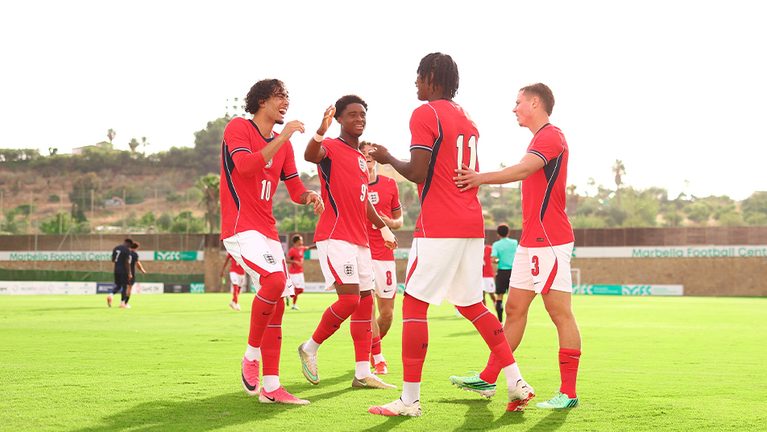
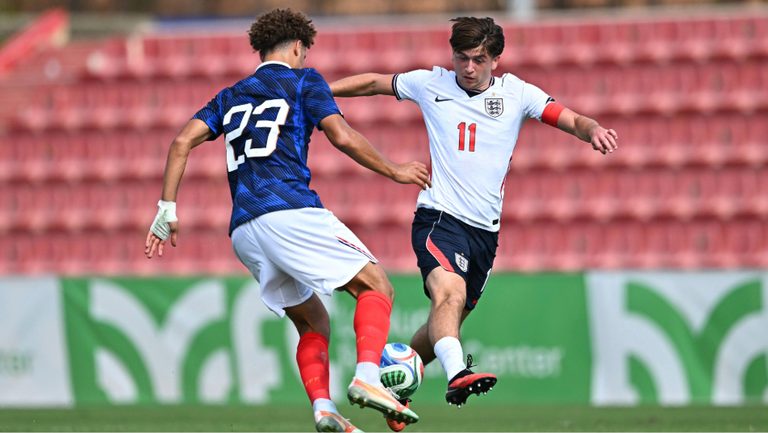
With their opening match against Nicaragua scheduled for this Saturday, England U15 are preparing to experience an international tournament unlike any other. From 24 to 30 October, the inaugural FIFA U-15 World Cup and Festival will bring together nearly 190 member associations in Baku, with a format designed to support the development of young players. With eight players per team, matches lasting 40 minutes and an unusual ranking system, the competition aims to give the next generation of talent more playing time and international experience.

An Unprecedented Format and a Record Number of Participants
Unlike traditional World Cups, this inaugural edition will not follow a conventional knockout format. Hosted in Azerbaijan, the tournament will feature teams made up of players born in 2011 and 2012, with one clear ambition : to give as many young footballers as possible the opportunity to test themselves against international opposition, regardless of their federation’s level or resources.
Each delegation will be permitted to register 14 players and include up to six members of coaching and support staff. Matches will be played eight-a-side, including the goalkeeper, on a reduced-size pitch measuring 68 metres by 47 metres, with regulation-sized goals. Games will consist of two 20-minute halves, separated by a five-minute interval. Several rules have also been adapted. Throw-ins will be replaced by kick-ins to encourage the game to flow more freely. The offside rule will apply only beyond specially marked lines positioned 14 metres from the goal line. Substitutions will be unlimited and can be made throughout each match.
These changes are intended to encourage decision-making, one-on-one duels and more frequent involvement with the ball. By reducing the number of players on the pitch, the size of the playing area and the duration of matches, FIFA hopes to create more opportunities for players to get involved in the action. The tournament structure follows the same principle. Teams will begin with a group-based qualifying phase, each playing between four and five matches in a league format. Their results will then determine their level for the second phase. Group winners will progress to Level A, while the remaining teams will be divided among five additional levels.
Every team will remain in the competition until the final day, with no permanent elimination after the group stage. Each level will have its own winner, but only the team that wins Level A will officially be crowned champions of the FIFA U-15 World Cup and Festival. Matches in the second phase will follow a cross-knockout system: winning teams will face other winners, while defeated sides will meet opponents who have also lost. If a match finishes level, a penalty shoot-out will decide the winner, with no extra time played. In total, nearly 1,000 matches are scheduled across six days, with up to 20 games able to take place simultaneously. Most fixtures will be played at the Hövsan Sports Complex in Baku, while the Baku Crystal Hall will host the opening match and the finals across all six levels.