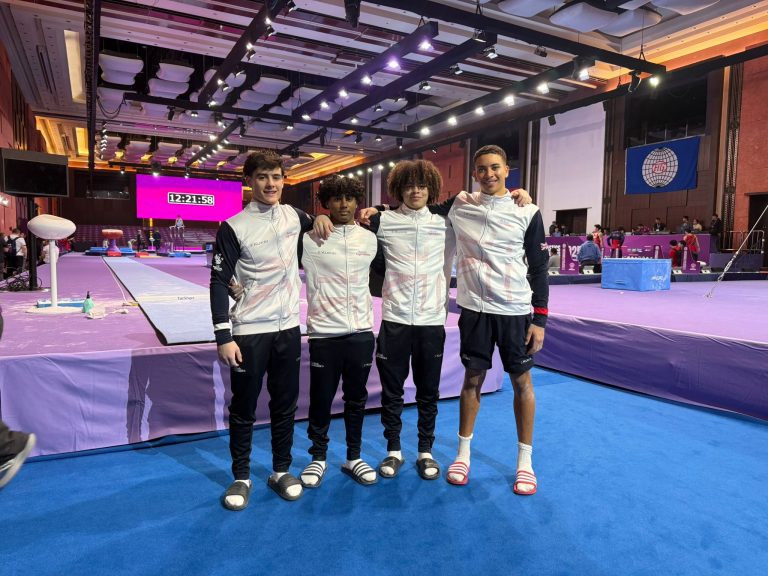
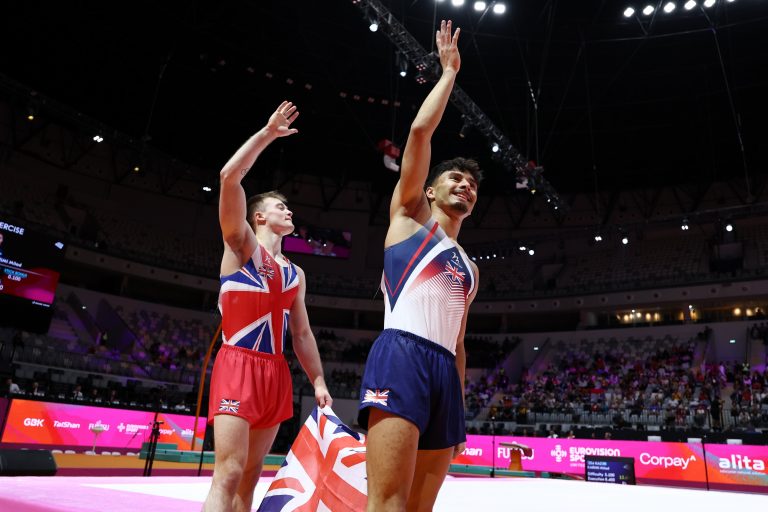
Joe Fraser, Uzair Chowdhury and the entire British delegation made their mark at the Men’s European Gymnastics Championships in Zagreb. With four gold medals, one silver and four bronze, the United Kingdom finished top of the medal table with nine podium finishes in total. Only the Russians collected more medals overall, although they won just two titles. After a more frustrating week for the women’s team, despite Eli Cardelli’s junior beam bronze and several fourth-place finishes, the response from the British gymnasts was emphatic.
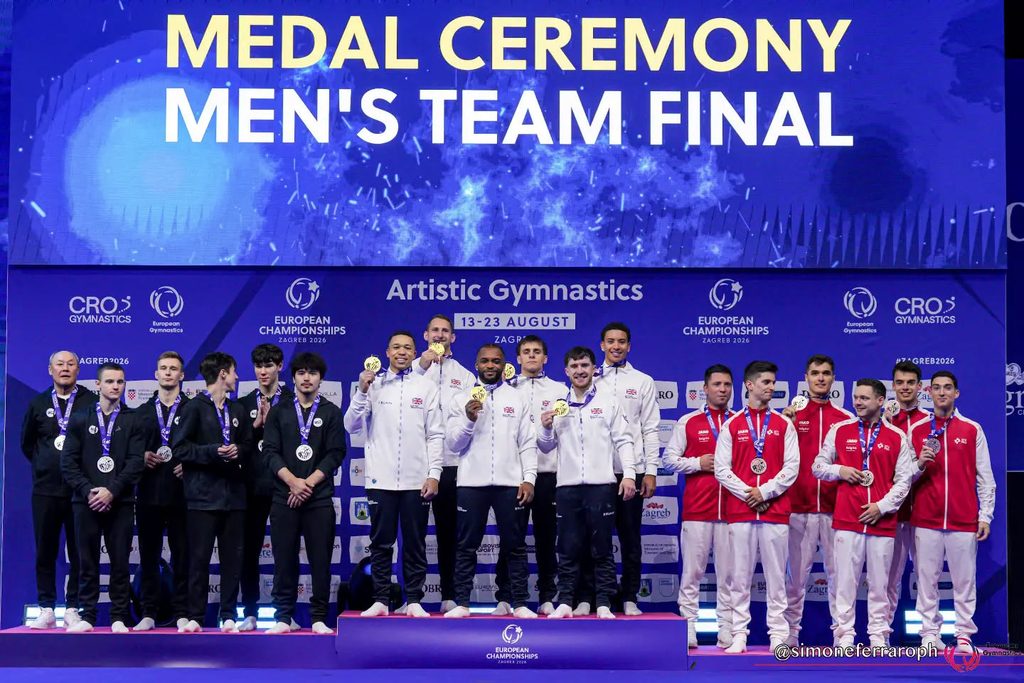
A British delegation delivering from rising stars to established names
This collective success carries particular significance given the stronger field compared with recent editions. The return of the Russians brought a fuller level of competition back to these European Championships, with no medals there for the taking simply because of the absence of major rivals. The United Kingdom therefore won its titles in a deeper and more competitive European field, giving this week in Croatia added weight just two months before the World Championships, the first step on the qualification pathway towards the 2028 Olympic Games in Los Angeles.
The clearest symbol of that strength was undoubtedly the double team triumph. The seniors retained their title with a score of 246.728, finishing ahead of the Russians and Switzerland, while the juniors also successfully defended their crown. Across both age groups, the United Kingdom once again demonstrated its depth as a team. The senior final in particular highlighted the ability of this group to deliver under pressure: Harry Hepworth came through on floor with a 14.300, while strong work on rings and vault had already helped build a decisive advantage. Joe Fraser also played a key role, most notably posting 14.200 on parallel bars.
Fraser then added an individual dimension to his championships by taking gold on high bar. Third in qualification with 14.200, he raised his level in the final to score 14.300 and beat a high-class field. His bronze on parallel bars, however, told a slightly different story. Having finished joint second in qualification with 14.366, he slipped marginally to 14.300 in the final, but still produced enough to secure a place on the podium. It was another demonstration of his consistency across two very different apparatus, and an encouraging sign of where his form stands ahead of the World Championships.
Among the younger gymnasts, Uzair Chowdhury confirmed that he is one of the leading names to watch during the road to 2028. Only sixth in qualification on parallel bars with 13.433, on an apparatus that is nevertheless his strongest, he produced one of the most impressive British improvements in the final, surging to gold with 14.166. George Atkins, seventh in qualification, also made a significant step forward when it mattered most, scoring 13.733 to take bronze. The two British gymnasts therefore turned relatively modest qualifying positions into a place on the top step and another spot on the podium.
Zakaine Fawzi-Mccaffrey followed a different path. Having led qualification on pommel horse with 14.066, he confirmed his place among Europe’s best in the final by taking silver, despite his score dropping slightly to 13.833. Hepworth, meanwhile, retained the bronze medal position on floor after qualifying third, although his 14.300 in the final was narrowly below his initial 14.333. Sol Scott also caught the eye in his first major senior competition, claiming vault bronze thanks to the quality of his execution and showing the composure required to perform on a major international stage.
In total, the four titles, one silver and four bronze medals put the United Kingdom ahead of Italy and Ukraine in the medal table, with both nations collecting three gold medals apiece. Beyond the raw medal count, however, the spread of those results is the real source of encouragement: from established figures such as Fraser and Courtney Tulloch to newer faces like Scott, alongside a junior generation already capable of winning major titles and overturning the hierarchy established in qualification. Two years out from the Los Angeles Olympic Games, British men’s gymnastics has a relatively young, competitive group that is already accustomed to winning against what is now once again a fully competitive European field.