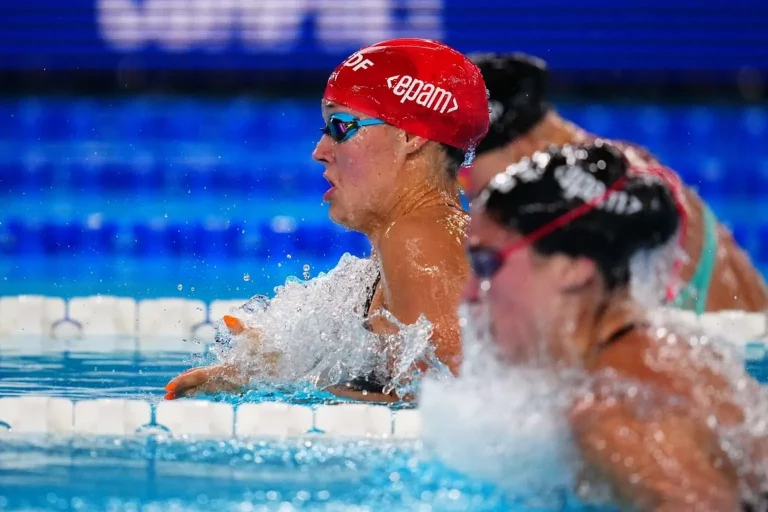
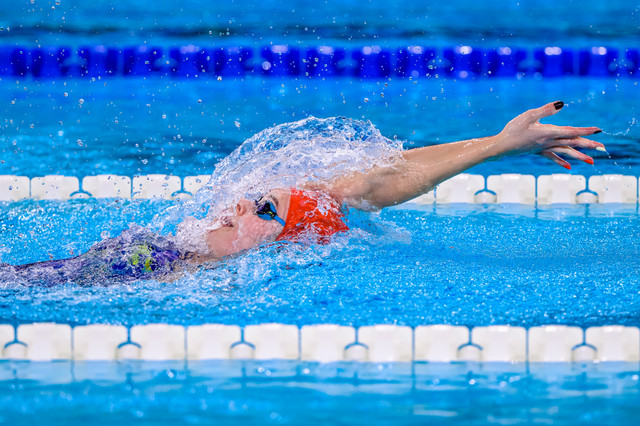
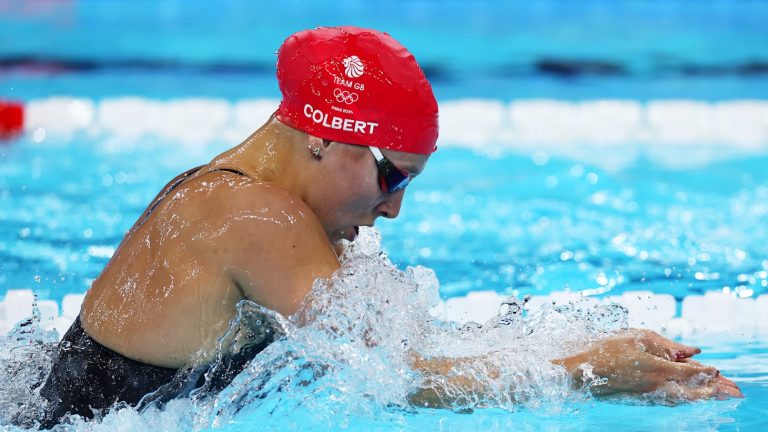
The opening day of the 2026 British Swimming Championships got underway with five finals on the schedule, all crucial in the race for qualification to the European Championships in Paris and the Commonwealth Games in Glasgow. The anticipated showdown between Adam Peaty and rising talent Filip Nowacki ultimately went in favour of the world record holder, while the women’s 100m freestyle final saw six of the eight finalists produce personal bests.
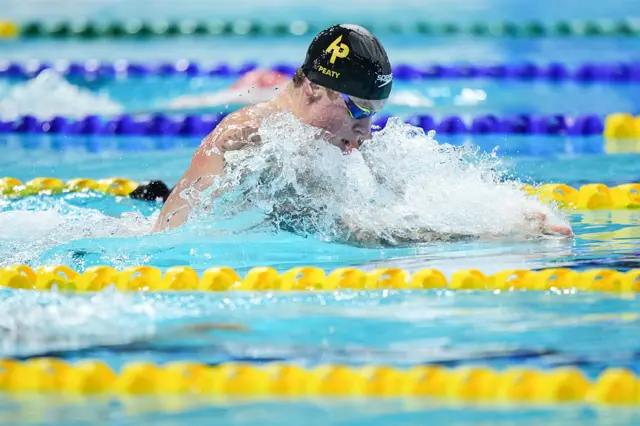
The evening session began with the men’s 400m freestyle. In the heats, Jack McMillan posted the fastest time in 3:49.95, turning in 1:53.20 at the halfway mark, while reigning national champion James Guy qualified sixth in 3:51.60. The final told a very different story. Guy took control early, opening in 25.21 before splitting 52.68 at 100m and 1:49.77 at 200m. He gradually extended his lead through remarkable consistency, holding every 50m split between 27.47 and 28.78 from the 100m to the 300m mark, before closing in 3:44.04. That time comfortably secured the qualification standards for both the European Championships (3:46.56) and the Commonwealth Games. Behind him, McMillan improved to 3:46.82, passing 200m in 1:50.44, but narrowly missed the European qualifying mark. Tyler Melbourne-Smith, born in 2005, took third place in 3:47.17 after turning in 1:51.90 at halfway. He recorded a personal best and achieved the Commonwealth qualifying standard.
The women’s 50m breaststroke final followed, decided by very fine margins. In the heats, Gabrielle Idle-Beavers (2008) impressed with a personal best of 30.82, the fastest time of the field and the 10th-best performance in national history. In the final, however, it was Imogen Clark who took the win in 30.69. She remained just outside the European qualifying time of 30.57 but met the standard for the Commonwealth Games. Anna Morgan finished second in 30.83, also above the European mark but within Commonwealth selection standards. Idle-Beavers placed third in 31.11, slightly slower than her morning swim, yet still securing her first senior medal. Behind them, Theodora Taylor (2009) clocked 31.29 for fifth place, confirming her level despite her age, while Imogen Myles (also 2009) finished seventh in 31.77.
Attention then turned to the women’s 200m butterfly. Ciara Schlosshan had led the heats in 2:08.75 but had to settle for third in the final. Keanna Macinnes successfully defended her title in 2:07.02. She split 28.45 at 50m, 1:01.01 at 100m and 1:34.47 at 150m, before finishing strongly to dip under the European qualifying time of 2:07.96. Emily Richards claimed second place in 2:07.70, turning in 1:01.24 at halfway, also achieving the European standard and coming close to her 2023 personal best. Schlosshan touched third in 2:08.63 after a fast 1:00.73 at 100m but a slower closing 50m of 34.26. Lucy Fox (2006) finished fourth in 2:08.90, with a split of 1:34.78 at 150m. Double world junior medallist Amalie Smith (2009) placed sixth in 2:11.17, turning in 1:37.01 and securing the Commonwealth qualifying time.
The highly anticipated men’s 100m breaststroke final then took centre stage, headlined by the clash between Adam Peaty and the younger generation, particularly Max Morgan and Filip Nowacki. In the heats, Peaty (59.30), Nowacki (59.83) and Morgan (59.98) were the only swimmers under the one-minute barrier. In the final, Peaty delivered, winning in 58.97 with a 27.48 split at 50m. He was the only swimmer under 59 seconds and comfortably met the European qualifying standard of 59.65. Nowacki, the reigning world junior champion over the distance, finished second in 59.39 with a 27.90 opening split, also achieving the European mark. Morgan completed the podium in 59.56, a personal best, after splitting 27.86 at halfway, likewise under the required standard. Gregory Butler placed fourth in 1:00.34, ahead of Christian Ryan in 1:01.02.
The final event of the evening, the women’s 100m freestyle, showcased an exceptionally high standard from the heats, with nine swimmers breaking the 55-second barrier. Freya Anderson had led the qualifiers in 54.05 ahead of Freya Colbert (54.31). In the final, Eva Okaro (2006) took the win in 53.75. She split 25.90 at 50m and maintained her advantage over the closing length. Her time secured the Commonwealth qualifying standard (54.05) but fell just short of the European mark of 53.62. Evelyn Davis (2004) finished second in 53.99 with a 26.02 split at halfway, significantly lowering her personal best. Colbert placed third in 54.02 after turning in 26.36. Anderson, the fastest qualifier, finished fourth in 54.19. Theodora Taylor (2009) confirmed her consistency with fifth place in 54.20, splitting 26.53, just outside the podium places, rounding off a high-quality final in which six of the eight finalists recorded personal bests.