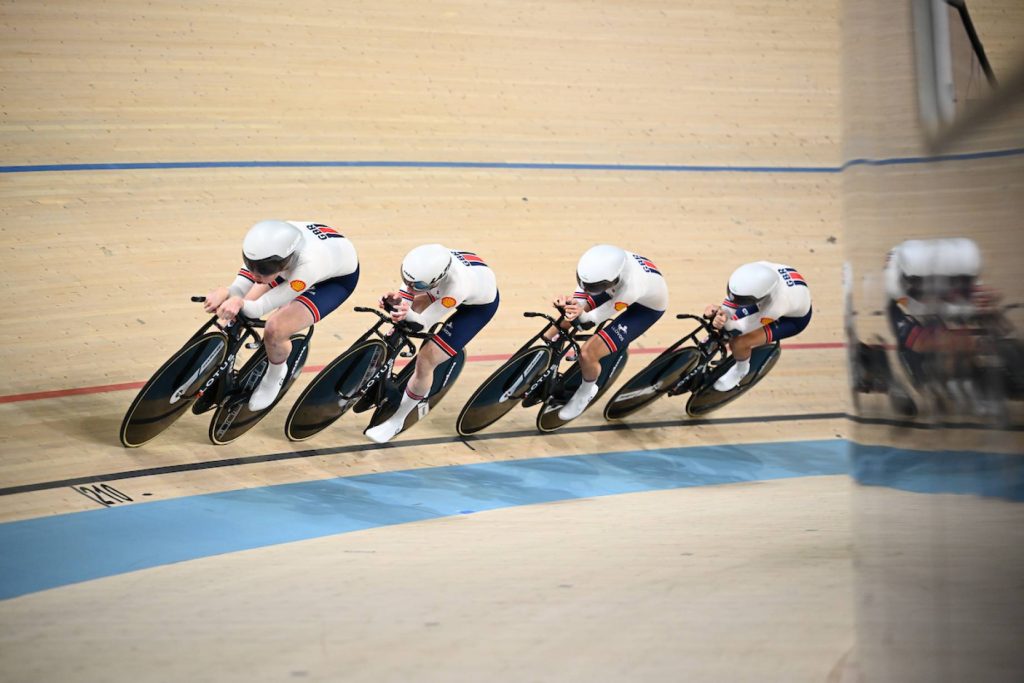
The third day of the 2026 European Track Cycling Championships once again swung decisively in British favour. Between Emma Finucane’s commanding display in the women’s individual sprint, Anna Morris’s perfectly controlled triumph in the omnium, and a series of finals contested at the very highest level, the British squad further underlined its grip on the Konya velodrome. Building on the momentum of the previous evening highlighted by Joe Truman’s breakthrough gold and the women’s team pursuit heroics, day three once again saw British cycling shine on the continental stage.
How the day unfolded
The evening picked up exactly where the previous day had left off: with the semi-finals of the women’s individual sprint. Drawn against Russia’s Alina Lysenko, Emma Finucane wasted no time in asserting her authority. Already hugely impressive in qualifying and the quarter-finals, the British sprinter simply blew her opponent away in the first heat, giving the clear impression she was operating on an entirely different level. Raw power, tactical intelligence and remarkable composure combined to make the outcome feel inevitable. A place in the final looked all but guaranteed, and with it, a very realistic shot at the European title.
In the other semi-final, Sophie Capewell lined up against Lea Sophie Friedrich, a rider who had long been the dominant force in European and world sprinting before Finucane’s emergence. Yet here too, British control was total. Capewell dictated the opening heat from start to finish, neutralising the German with disarming ease. Even before the second rides were contested, the prospect of an all-British final was no longer speculative — it was rapidly becoming the expected outcome.
While the women sprinters took a brief recovery window, attention turned to the men’s sprint, which had reached a decisive stage with a quarter-final that carried a bittersweet edge for the British camp: a head-to-head between Harry Ledingham-Horn and Matthew Richardson. Richardson, who earlier in the day had been the only rider to dip under nine seconds in qualifying with a stunning 8.963, duly lived up to his billing. He dominated the first heat, confirming his status as the man in form. His qualifying performance had already set him apart, ahead of the likes of Harrie Lavreysen, Tom Derache and Mateusz Rudyk, and he increasingly looked like the rider everyone else would have to beat. Looming in the background was the mouth-watering prospect of a showdown with Lavreysen — a true colossus of the discipline, five-time Olympic champion and fourteen-time European champion — widely regarded as the only rider capable of halting Richardson’s charge on the continental stage.
The focus then shifted to the women’s omnium, with the third of its four events: the elimination race. Sitting second overall before the start, Anna Morris endured a nervy opening, narrowly avoiding elimination as early as the fourth sprint. However, the Welsh rider kept her cool, repositioned smartly and gradually worked her way back towards the front. As the field thinned and the race became increasingly tactical, Morris remained exactly where she needed to be. With four riders left, she was firmly in the right group, before the shock elimination of her main Belgian rival dramatically reshaped the contest. Victory in the race went to the Norwegian rider, but Morris’s second place proved crucial: by gaining just enough points, she moved into the overall lead of the omnium by a slender two-point margin heading into the decisive points race.
Back on the sprint track, British supremacy was emphatically confirmed. Emma Finucane showed no mercy in the second heat against Lysenko, reproducing the same overwhelming dominance to book her place in the final. Sophie Capewell followed suit against Friedrich, facing slightly more resistance but never relinquishing control. The verdict was unequivocal: two British riders in the final, two medals guaranteed, and the certainty of another gold medal for the United Kingdom. In the men’s competition, Matthew Richardson completed his job against Ledingham-Horn with a straight-heats victory. He will be joined in the semi-finals by Lavreysen, Nikita Kiriltsev and Mateusz Rudyk — all three also advancing without the need for a deciding ride, though the Russian and the Pole both emerged from extremely tight and physical contests.
The men’s scratch race then delivered a very different kind of narrative. Much was expected of Britain’s William Tidball, world champion in the discipline in 2023, but he was ultimately unable to influence a race that was expertly locked down by Switzerland’s Alex Vogel and Russia’s Ilya Savekin. The pair quickly gained a lap on the field, effectively sealing the top two positions early on. Vogel claimed the European title ahead of Savekin, with Dutchman Vincent Hoppezak completing the podium. It was a frustrating outcome for several big names, caught out by a race scenario that left little room for manoeuvre.
The finals of the men’s individual pursuit followed. In the bronze medal ride, Matthew Bostock — slower in qualifying than Italy’s Renato Favero — was hoping to emulate Joe Truman’s ability to overturn the rankings from the previous day. But Favero took control early, stretching the gap beyond two and a half seconds by halfway. At 3,250 metres, the Italian caught Bostock, consigning the Briton to fourth place. The gold medal final once again demonstrated that qualifying times are no guarantee of ultimate success: Lev Gonov, second fastest in the heats, defeated Denmark’s Robin Juel Skivild, who had topped the qualifying standings, to claim the European crown.
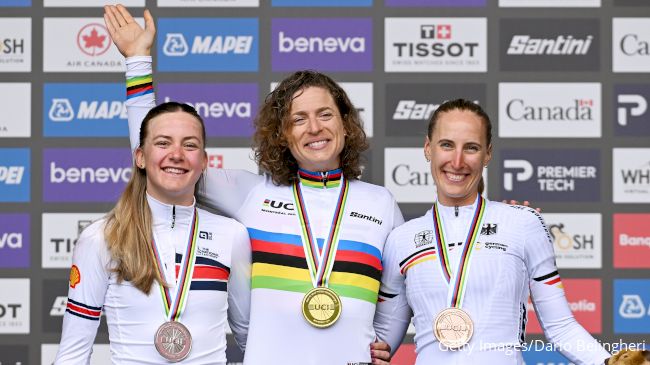
The evening reached its climax with the women’s sprint finals and the conclusion of the omnium. In the bronze medal final, Lysenko beat the German rider in two straight heats. Then came the highly anticipated all-British gold medal clash between Emma Finucane and Sophie Capewell. Showing no sign of nerves, Finucane dominated both rides to secure the European title, confirming her status as the undisputed queen of European sprinting and adding yet another major honour to her rapidly growing palmarès. Finally, the omnium points race showcased Anna Morris at her most intelligent and controlled. Level on points with Belgium’s Bossuyt at the start, Morris steadily accumulated points in the early sprints, gradually opening a decisive gap. Always well positioned and never caught out, she entered the final sprint with a sufficient cushion to ensure overall victory, provided she avoided losing a lap. She did exactly that. Morris was crowned European champion, ahead of Norway’s Anita Stenberg and Belgium’s Bossuyt, at the end of an omnium executed to near perfection.
A third day that once again confirmed British dominance in Konya, driven by a generation brimming with confidence and talent, and now firmly established at the summit of European track cycling.