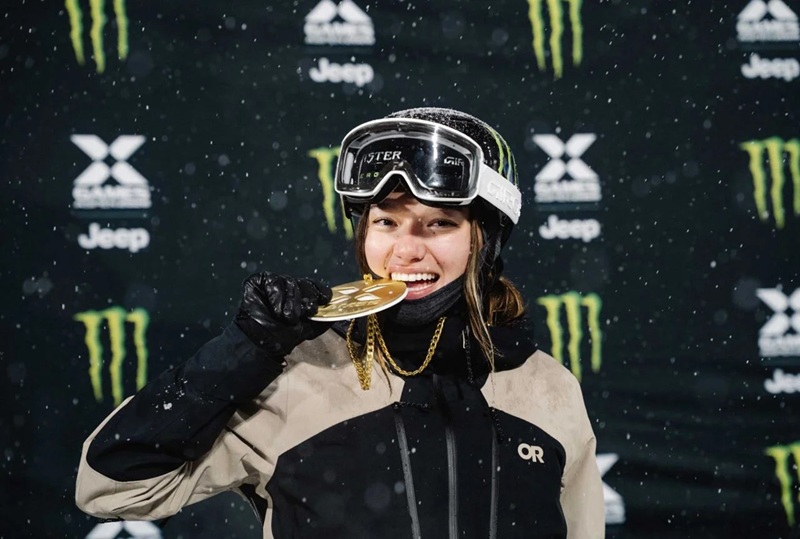
Mia Brookes, Kirsty Muir and Zoe Atkin have dominated one of the most prestigious events in global freestyle sport. Held every winter, the X Games bring together the very best snowboarders and freeskiers in the world, acting both as a spectacular showcase and as a reliable barometer of elite performance in the build-up to the Olympic Games. At the 2026 edition, staged just over a month before the Milano–Cortina Winter Olympics, the three Britons struck gold in their respective disciplines, delivering a truly historic campaign for the United Kingdom.
A historic edition of the X Games
What the 2026 X Games laid bare was the clear shift in Britain’s standing within winter sports. No longer outsiders capable of the occasional standout result, British athletes are now able to dominate an iconic event that has long been the preserve of Alpine powerhouses and North American nations. By claiming three gold medals across three different disciplines — snowboard slopestyle, freeski slopestyle and freeski superpipe — Team GB produced the most successful X Games campaign in its history, achieved by a group of young athletes peaking with confidence just weeks before the Olympic Games.
The most striking symbol of this rise is undoubtedly Mia Brookes. At just 19 years old, the snowboarder from Cheshire captured her second X Games slopestyle title in Aspen, adding to the gold she won in 2024 and further strengthening an already outstanding résumé. Her score of 96.33, achieved in an exceptionally deep field, left little room for debate. Up against world-class rivals such as Zoi Sadowski-Synott and Kokomo Murase, Brookes did not merely win — she sent a clear message that she will be the rider to beat at Milano–Cortina.
Already a world champion and a Crystal Globe winner, Brookes continues to combine technical progression with remarkable consistency. Her performance at Aspen reinforced the sense that she is entering the Olympic winter not as a promising youngster, but as an established leader of the discipline. With victories across multiple formats and venues, she represents one of Britain’s most credible gold-medal hopes in Italy.
In a different but equally telling way, Zoe Atkin once again underlined her status as one of the most reliable performers on the global freeski circuit. The 22-year-old, who previously won X Games gold in 2023 and silver in 2024, this time dominated the women’s freeski superpipe, taking victory with a score of 94.66, ahead of Australia’s teenage sensation Indra Brown, born in 2010.
Unlike Brookes, Atkin is no longer a new name on the scene. She has been competing at the highest level for several seasons, but her success in Aspen carries particular significance given the wider context. A competitor at the Beijing 2022 Olympics, where she narrowly missed out on a podium, Atkin now heads towards her second Olympic Games with invaluable experience, renewed confidence and a strong season behind her. That form includes multiple World Cup podiums and a world championship title won less than a year ago, in March 2025, reinforcing her credentials as a serious contender once again on the Olympic stage.
The third British victory of the 2026 X Games was arguably the most emotionally charged of all. At 21, Kirsty Muir finally claimed her first X Games gold medal, triumphing in women’s freeski slopestyle with a commanding score of 93.66, well clear of the rest of the field. The achievement carries added weight given the difficult period that preceded it. A serious knee injury had sidelined the skier from Aberdeen for many months, casting doubt over her ability to return to her very best.
Her early-season performances hinted at a return to form, but in Aspen Muir delivered a statement run. From her very first attempt, she skied with control, confidence and aggression, immediately putting pressure on her rivals. No other athlete managed to break the 90-point barrier, underlining the margin she carved out through the quality and fluency of her skiing. Her competition only grew more impressive from there. In the women’s Big Air, Muir came within 0.66 points of an extraordinary double, settling for silver behind Mathilde Gremaud after landing a massive final trick.
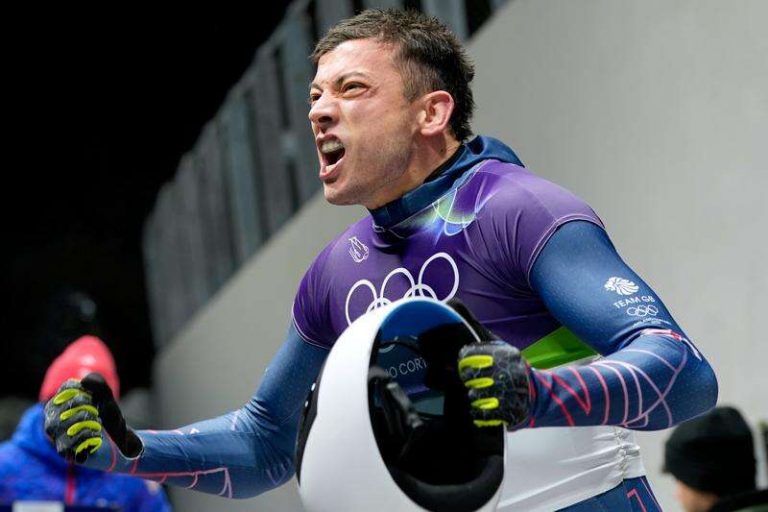
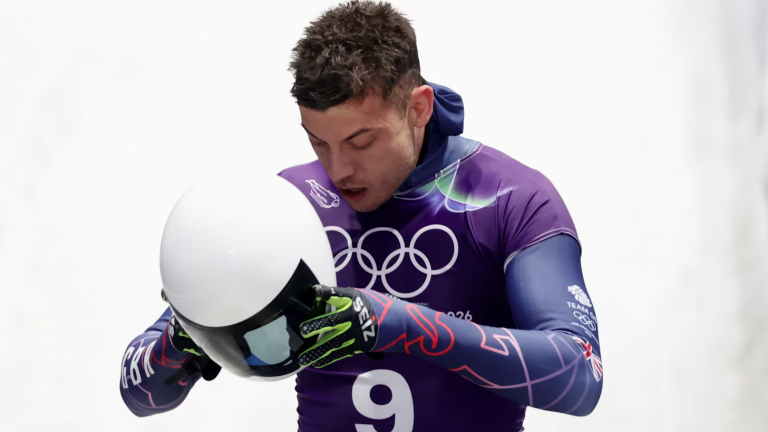
Taken together, these three gold medals tell a story that goes far beyond a single successful weekend. They reflect a broader upward trajectory in British winter sports, one that is also evident in disciplines such as skeleton, where Matt Weston and his teammates currently dominate the World Cup circuit, and at junior level, where British athletes continue to deliver standout results year after year.