With just weeks to go until the Milan-Cortina 2026 Winter Olympics, scheduled from 6 to 22 February, British skeleton is heading into the Games with a level of confidence rarely seen in the recent history of winter sport in the United Kingdom, a nation that has never been a major medal powerhouse on snow and ice. At the European Championships in St. Moritz, Matt Weston delivered continental gold, while Tabitha Stoecker secured silver in the women’s event. Two standout results, achieved on one of the most demanding tracks on the circuit, which further underline British ambitions ahead of the Olympic skeleton competitions, set to take place from 12 to 15 February in Italy.
Skeleton, a cornerstone of British Olympic ambitions
Once considered a niche discipline, skeleton has rapidly become one of the United Kingdom’s most reliable sources of success in winter sport. This rise has been driven by a new generation of athletes capable of challenging the world’s best — and above all by one outstanding figure: Matt Weston.
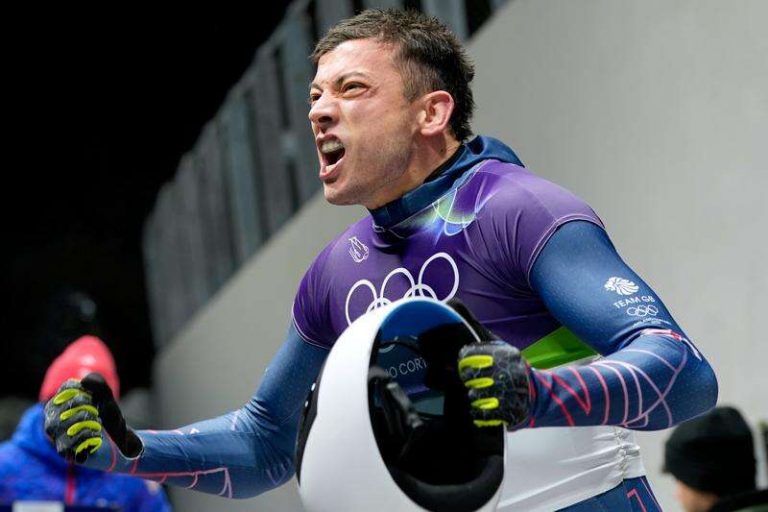
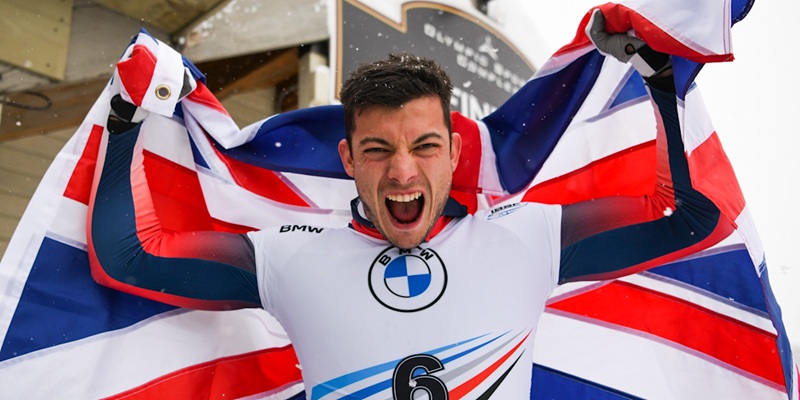
In St. Moritz, the British slider once again dominated the field. By winning the World Cup race, which also doubled as the European Championships, Weston secured his fifth victory in six races this season. His combined time of 2:16.58 saw him win by almost a full second, an extraordinary margin at the highest level of sliding. Already the reigning world champion and overall World Cup holder, Weston added a second European title to his résumé, following his first triumph in 2023.
At 29, Weston appears to be operating on a different level. His explosive start speed, technical precision and ability to adapt to vastly different track profiles have made him the undisputed leader of the circuit. More than that, he now stands as the clear global benchmark heading into the Olympic Games, where he will arrive as one of the leading contenders for gold.
Behind him, the British squad continues to showcase impressive depth. Marcus Wyatt, the reigning European champion prior to this edition, remains a key part of the programme despite a quieter race in Switzerland, while Jacob Salisbury recorded his best result of the season, finishing 13th in the World Cup and ninth among European athletes.
In the women’s field, the picture is just as encouraging. Tabitha Stoecker confirmed her status by claiming European silver after two composed and consistent runs. At 25, the former trapeze artist has firmly established herself among the world’s elite, not least thanks to one of the most explosive starts on the circuit. Fourth in the corresponding World Cup race, she now sits fourth overall heading into the season finale.
St. Moritz sends a strong signal ahead of Milan-Cortina 2026
In Switzerland, Weston notably finished well clear of Italy’s Amedeo Bagnis, the European silver medallist and a representative of the host nation for the upcoming Games. It is a duel that could soon be replayed on Italian ice, where the pressure on home athletes will be intense. For the Briton, winning by such a margin in this context only strengthens his already compelling status as the man to beat.
In the women’s competition, Stoecker’s silver medal forms part of a broader collective momentum. The United Kingdom has now won a medal at every women’s European Championship throughout the current Olympic cycle. Amelia Coltman, a medallist in previous seasons, and Freya Tarbit, a consistent top-level performer, complete a trio capable of challenging at the sharp end, both individually and as a team.
That depth was further highlighted by the European bronze medal won by Jacob Salisbury and Freya Tarbit in the mixed team event — an achievement of particular significance for two athletes who have received less individual attention this season. With the discipline set to make its Olympic debut in Milan-Cortina, it could offer another valuable medal opportunity for the United Kingdom, whose squad depth increasingly stands out when compared to rival nations.