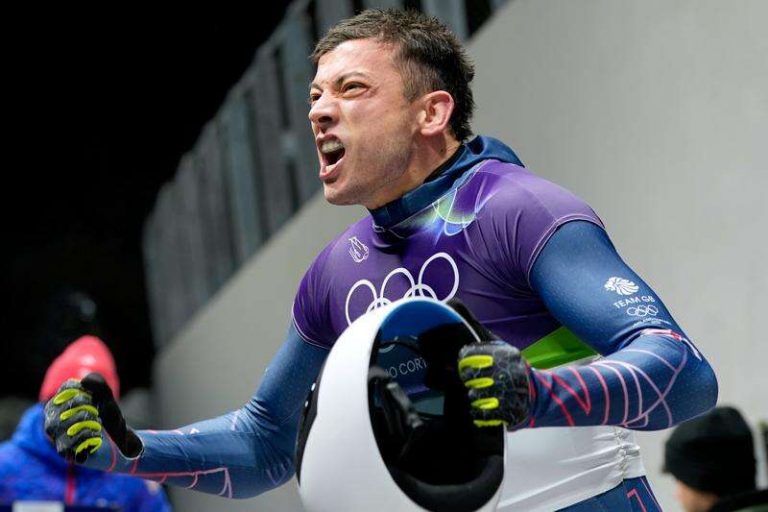
Skeleton has officially ignited British medal ambitions at Milan-Cortina 2026. And from the very first heat, Matt Weston laid down a formidable marker. The reigning world champion clocked the provisional fastest time on the Cortina d’Ampezzo track, smashing the track record in the process. Behind him, Marcus Wyatt remains firmly in contention in seventh place, ready to capitalise on any slip. After one run, Team GB may be on the brink of securing its first medal of these Games, following three agonising fourth-place finishes elsewhere.
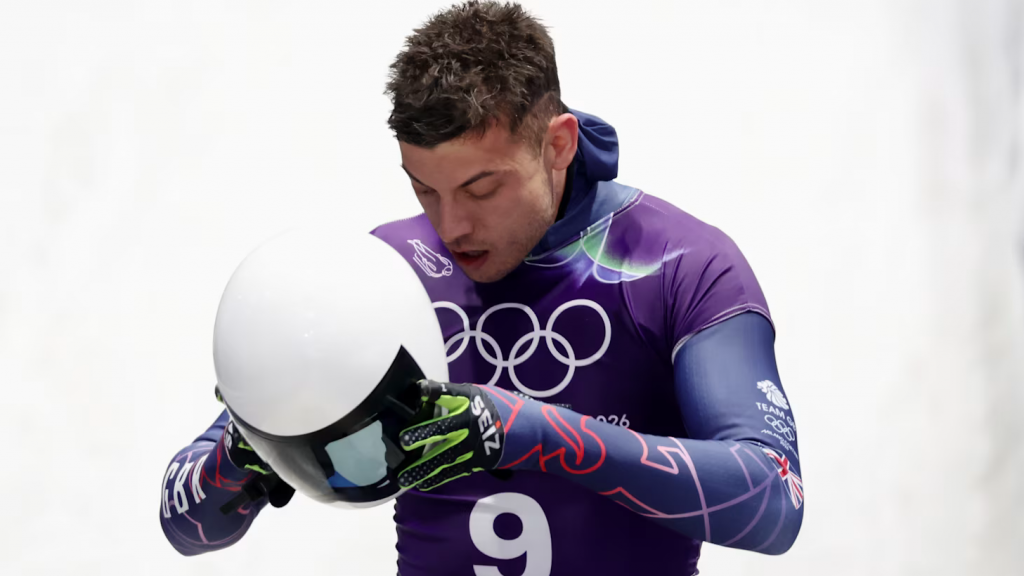
If Weston’s performance was eye-catching, it was anything but unexpected. The 29-year-old has dominated the international circuit throughout the winter : overall World Cup champion, world champion, European champion. This season, he has skated with the assurance of an athlete at the peak of his powers. His progression has not merely been technical, but psychological. He now handles the sport’s biggest stages with composure and authority.
Weston’s strength lies not only in his explosive starts : consistently among the quickest in the field, but in his ability to carry speed through the technical sections of the track, where races are truly won and lost. Skeleton is a discipline of fine margins, where precision steering and clean lines through corners can make the difference between gold and obscurity. Weston has repeatedly demonstrated that he possesses that rare blend of aggression and control.
Yet the real British breakthrough in recent seasons has been the depth of the squad. Marcus Wyatt, third overall in this year’s World Cup standings, arrives in Cortina as a genuine outsider with podium credentials. Consistent and technically assured, he has proven on multiple occasions that he can match the sport’s elite over a single run or across a full competition.
Indeed, between them, Weston and Wyatt have won every World Cup race contested this season, with Weston holding a clear upper hand in terms of victories. That statistic alone underlines the scale of Britain’s authority in the discipline heading into these Games.
Weston leads after record-breaking opener, Wyatt poised to strike
The Olympic skeleton format is unforgiving : four runs spread across two days. Two heats on day one, followed by two more on day two. The times from all four runs are combined, and the athlete with the fastest aggregate time is crowned Olympic champion. There is no safety net. Every run matters, every hundredth of a second can prove decisive, and the smallest mistake can derail medal hopes. Ultimately, the format rewards consistency above all else.
First out of the start gate at the Cortina Sliding Centre, Weston immediately embraced the pressure that comes with being favourite. There was a minor brush with the wall in the upper section of the track – the kind of error that can sometimes spiral into lost momentum, but he corrected swiftly and delivered a superbly controlled lower section. It was there, in the technical final sector, that he separated himself from the field.
The clock stopped at 56.21 seconds. A new track record.
It was a statement run. Particularly given that Weston had already gone quicker in training earlier this week, posting a 56.11. That suggests there is still room for improvement as the competition unfolds. At the finish, he smiled and acknowledged the crowd, the demeanour of a man aware that he has seized the early psychological advantage.
The chasing pack, however, remains dangerously close. Germany’s Axel Jungk, the silver medallist from Beijing, sits just six hundredths of a second adrift. Italy’s Amedeo Bagnis, buoyed by home support, is 0.16 seconds back. In skeleton terms, those margins are razor-thin – entirely recoverable over the remaining three runs.
Wyatt, meanwhile, is provisionally seventh in 56.52, 0.31 seconds behind his team-mate. A noticeable gap, certainly, but far from insurmountable across four heats. Significantly, at the first split, Wyatt had matched Weston exactly. The difference came in the lower half of the track, where Weston’s superior flow and corner management translated into precious hundredths gained.