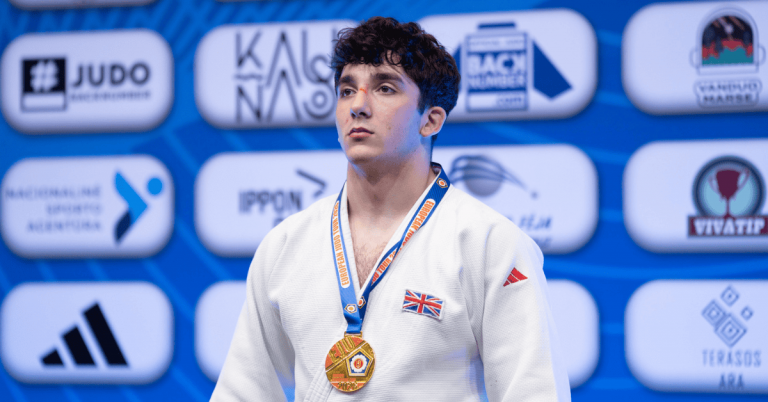
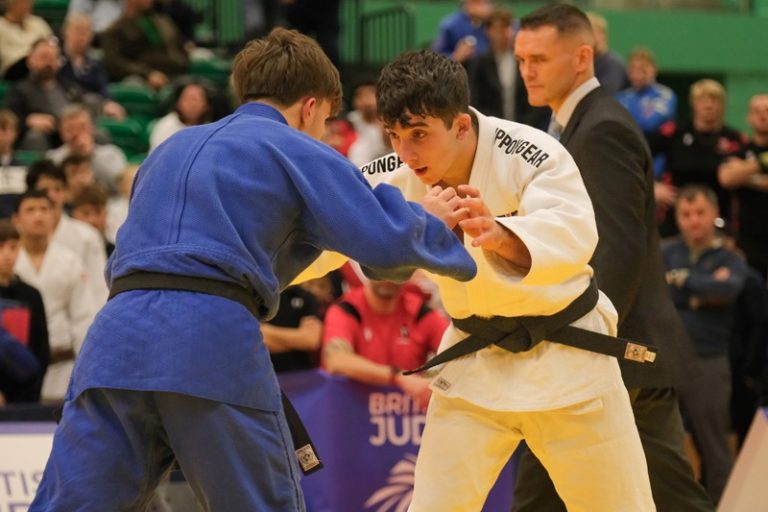
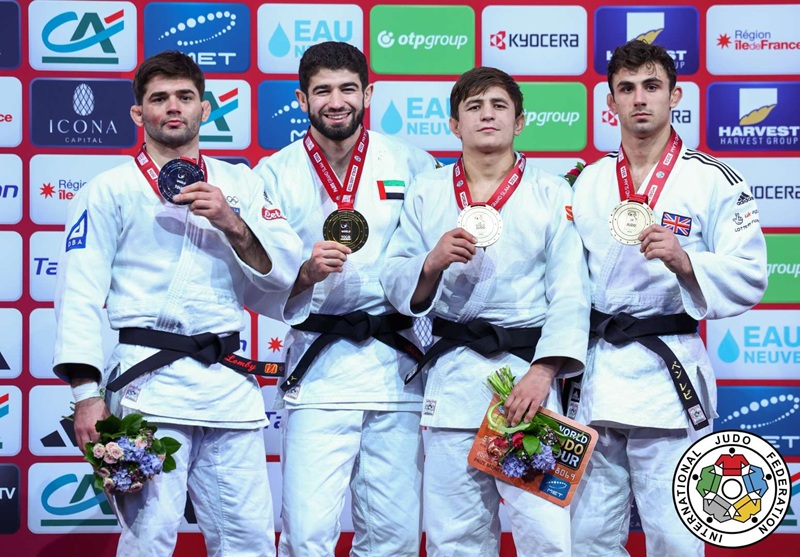
Eight years after the last British men’s medal on the Paris tatami, British judo has finally returned to the podium on one of the sport’s most iconic stages. Inside the electric atmosphere of the Accor Arena, 21-year-old Ben Levy delivered one of the standout British performances of recent years, securing a bronze medal in the -73kg category at the Paris Grand Slam. His remarkable run included the scalp of reigning world champion Joan-Benjamin Gaba, the darling of the home crowd, in a result that sent shockwaves through the arena.
A defining Parisian breakthrough for Ben Levy
Born in Paris but raised in London from an early age, Ben Levy arrived at the Paris Grand Slam with growing momentum but without the guarantee of a breakthrough at the sport’s very highest level. A product of the Budokwai — the United Kingdom’s most prestigious judo club and the oldest outside Japan, Levy had already put together a highly consistent 2025 campaign. Multiple junior European titles and a steady transition towards senior competition suggested potential, but Paris would provide the ultimate test.
From his opening contest, Levy set the tone. Drawn against South Korea’s Jaehong An, a Paris Grand Slam medallist in 2023, the Briton delivered a controlled and intelligent performance. Calm under pressure, he dictated the tempo and came through with authority to book his place in the round of sixteen.
Awaiting him was what appeared to be an insurmountable obstacle: Joan-Benjamin Gaba. The reigning world champion, Olympic silver medallist and competing on home soil, Gaba had the full weight of the Accor Arena behind him. On paper, the contest looked brutally one-sided.
Yet Levy never appeared overawed. In a cauldron of noise and expectation, he displayed remarkable composure, flipping the emotional balance of the bout on its head. Tactically astute, sharp in his movement and ice-cool in decision-making, Levy forced Gaba out of rhythm before delivering the decisive moment in extra time. It was one of the shocks of the tournament.
“I knew the crowd would be behind him,” Levy later explained, “but in my mind, this was my city too. I was born here.”
In the quarter-final, Levy faced Kazakhstan’s Kuanov, a less heralded opponent but one with significant senior experience. Once again, the Briton imposed his style. A well-timed pick-up earned him a yuko, and from there he managed the contest with impressive maturity. Levy’s exceptional flexibility, one of his defining attributes, allowed him to attack without overcommitting and to defend while constantly on the move, denying Kuanov any chance to settle.
The semi-final against Italy’s Manuel Lombardo, one of the category’s established world-class operators, provided Levy’s only setback of the day. A perfectly executed ko-uchi-gari proved decisive, though Levy’s trademark suppleness limited the impact and kept him competitive throughout. It was a narrow defeat, but one that underlined how close he already is to the elite.
Still, the opportunity for a medal remained.
In the bronze medal contest, Levy came up against Japan’s Ishihara, a double world medallist and fifth in the world rankings. For many, this represented another daunting assignment. Levy, however, approached it with clarity and confidence. Patient and precise, he waited for the opening he had been searching for all day. When it finally came, he executed a superb seoi-otoshi to secure victory — and with it, a first Grand Slam medal and a career-defining moment.
A fearless British generation making its mark
While Levy’s bronze quite rightly captured the headlines, it should not overshadow the broader message sent by the British men’s team in Paris. Beyond medals, it was the calibre of opponents defeated that truly stood out.
In the -66kg division, Michael Fryer, ranked just 78th in the world, produced one of the performances of the day by throwing Olympic and double world medallist Denis Vieru in golden score with a beautifully executed ashi-waza. It was a statement victory, highlighting Fryer’s ability to compete with the very best despite limited experience at Grand Slam level.
In the same category, Charlie Young also delivered a major result, defeating Georgia’s Vazha Margvelashvili, an Olympic silver medallist and one of the division’s most consistent performers. For a judoka still establishing himself on the IJF World Tour, it was a significant marker of progress.
Perhaps the most exciting prospect of all, however, is Irakli Goginashvili. Just 19 years old and still eligible as a junior, the reigning Junior European Champion threw Mongolia’s Lavjargal — a 2024 world bronze medallist — for ippon. Already a junior world bronze medallist himself, Goginashvili’s performance reinforced his status as one of British judo’s brightest talents and a genuine future contender at senior level.