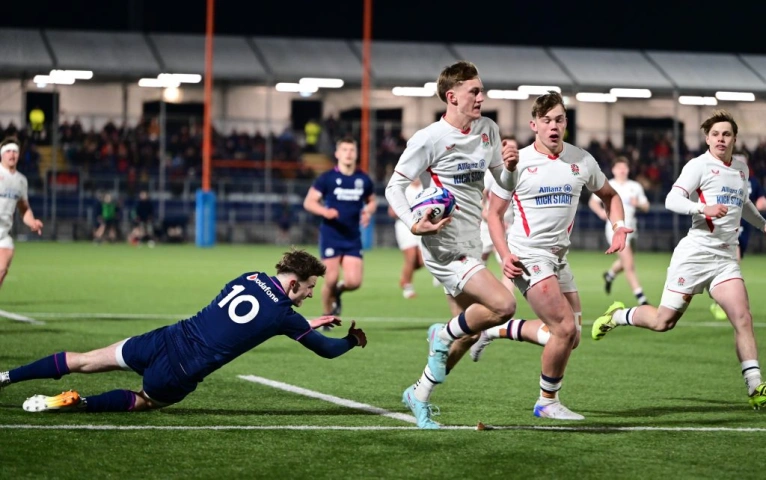
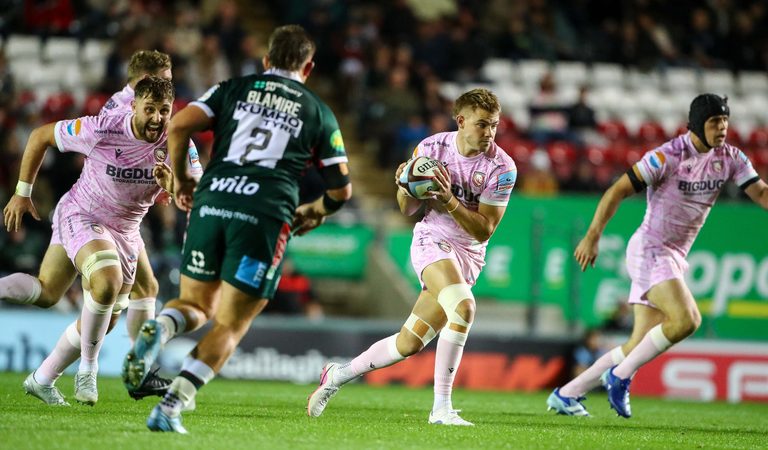
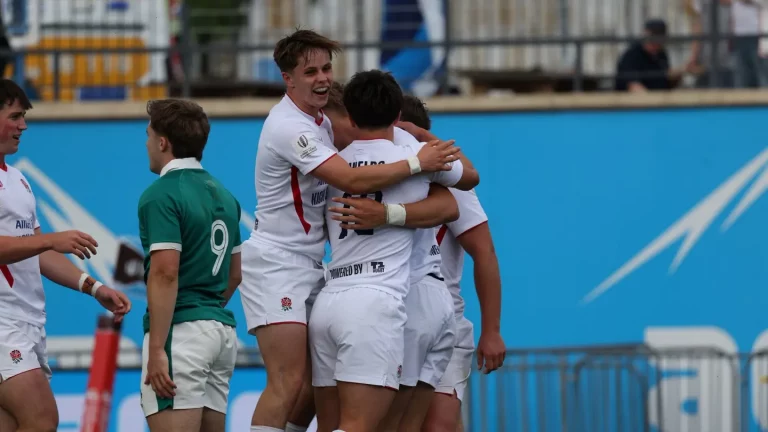
England U20 saw their early Championship momentum halted by a 31–21 defeat to Ireland in a match defined by two very different halves. Dominant in the collisions and largely in control during the opening forty minutes, Andy Titterrell’s men were unable to maintain that grip after the break, as Irish efficiency — and a handful of pivotal refereeing calls — swung the contest decisively. It is a result that leaves a bitter taste and throws the title race wide open once again.

Match Report
The opening exchanges underlined England’s intent. There was ambition in the attacking shape, a clear willingness to move the ball to the edges and attack the seams of the Irish defensive line. Early phases featured sharp offloads and clever running lines, forcing Ireland onto the back foot without yielding immediate reward. Ireland responded in kind, shifting the ball wide and finding space on the outside channels before England’s scramble defence ripped possession away just metres from their own try line.
It was from structured set-piece play that Ireland eventually opened the scoring. After England conceded a penalty inside their 22, Ireland kicked to the corner and executed a well-drilled line-out drive. The maul made inroads before hooker Lee Fitzpatrick peeled away with a sharp inside step to touch down. The conversion was added, giving the visitors a 7–0 lead in clinical fashion.
England, however, did not panic. Gradually, they began to assert themselves physically. The scrum, in particular, became a platform of authority, with the English tight five — and especially Ollie Streeter on the tighthead — establishing clear ascendancy. Around the park, England carried with greater punch and met Irish runners with dominant tackles, shifting the momentum of the contest.
The equaliser came courtesy of James Pater’s sharp rugby instincts. Fielding an Irish up-and-under without contest, the full-back immediately broke the first tackle before releasing George Pearson out wide. The winger capitalised on two missed tackles and showed impressive strength to arc back infield and score beneath the posts. Finn Keylock added the extras to level matters at 7–7.
From that point, England controlled territory and tempo. Sustained pressure deep in Irish territory led to repeated infringements, and after a series of close-range carries, captain Connor Treacey powered over from short range to cap a period of clear dominance. At 14–7 heading into the break, England were good value for their advantage. As in previous fixtures, their start had been measured, but once settled, they looked the more cohesive and physically imposing side.
The complexion of the match shifted dramatically after half-time.
An Irish 50–22 immediately flipped field position, and from the ensuing pressure, Josh Neill burrowed over to restore parity at 14–14. Ireland emerged from the dressing room with renewed aggression at the breakdown and greater urgency in their phase play, while England’s precision dipped at crucial moments.
The turning point arrived around the hour mark. Ireland’s third try, scored out wide following a flowing move, appeared to involve a clear knock-on in the build-up — particularly on the penultimate pass — evident on replays from the stands. Without TMO intervention, however, the score stood, nudging Ireland into a 21–14 lead and shifting the psychological balance of the contest.
Moments later, fortune again favoured the visitors. A speculative Irish kick ricocheted awkwardly, taking an improbable bounce before dropping kindly into the hands of the Irish winger, who needed no second invitation to finish. It was a chaotic sequence, born more of circumstance than design, but it extended Ireland’s advantage. In contrast, when Will Knight crossed late on for what would have been England’s fourth try — and two potentially crucial bonus points — the effort was correctly ruled out for a knock-on in the build-up. The decision itself was accurate, yet inevitably invited comparison with earlier moments that had gone unchecked.
To England’s credit, they refused to fold. Earlier in the second half, Nick Lilley reignited hope with a well-taken try following a sharply executed line-out move, reducing the deficit to 28–21 after the conversion. At that stage, the contest remained finely poised. But Ireland managed the closing stages with composure, and a long-range penalty stretched the margin to ten points at 31–21. Several breakdown decisions during this spell prompted visible frustration among the England players, who struggled to regain momentum in the face of mounting pressure.
It would be simplistic to attribute the defeat solely to officiating. England’s second-half display lacked the consistency, discipline and territorial control and was just not good enough unlike their first forty minutes. Their breakdown accuracy dipped, and their game management wavered at key junctures. Yet in a tight Test match where marginal calls can tilt the balance, certain moments undeniably shaped both momentum and scoreboard.
From a standings perspective, the implications are significant. Having taken nine points from a possible ten across the opening two rounds, England leave empty-handed on this occasion. Should France secure victory over Italy, the title picture could shift dramatically. Ireland, meanwhile, depart Bath with a richly valuable bonus-point win.