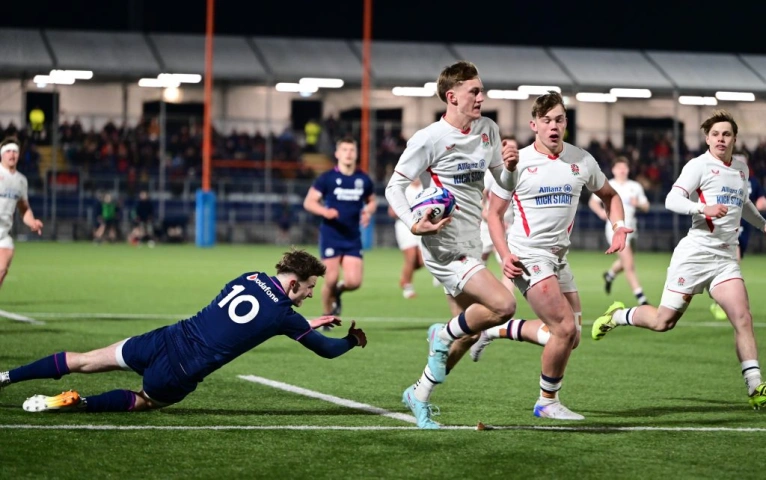
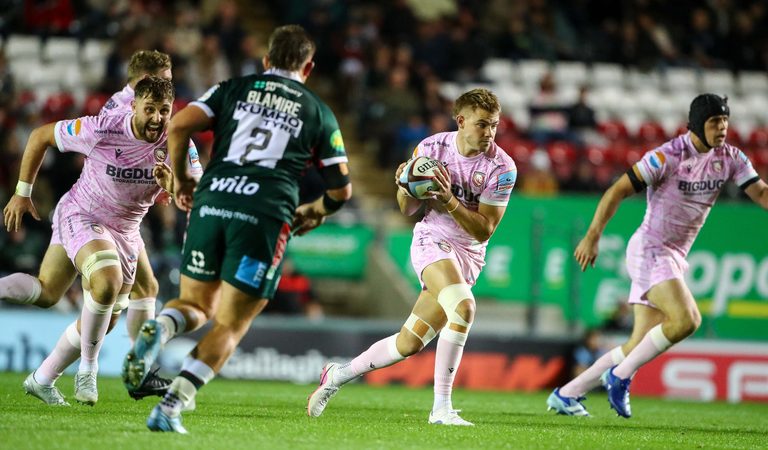
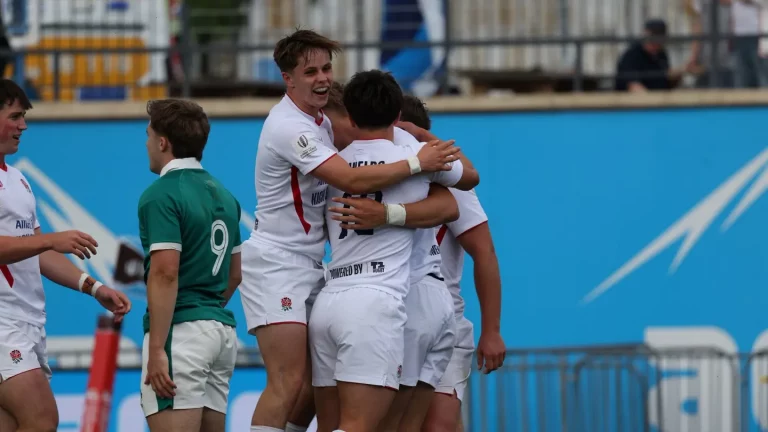
After edging past Wales on the opening weekend of the 2026 U20 6 Nations, England backed up that statement win with an emphatic 33–17 victory over Scotland at Hive Stadium in Edinburgh. In a contest that remained finely poised for long spells, Andy Titterrell’s side combined attacking ambition with clinical finishing to secure a valuable bonus-point win that could prove significant in the title race. More inventive with ball in hand and sharper in key moments, England’s young guns are beginning to look like genuine contenders in this year’s Championship.
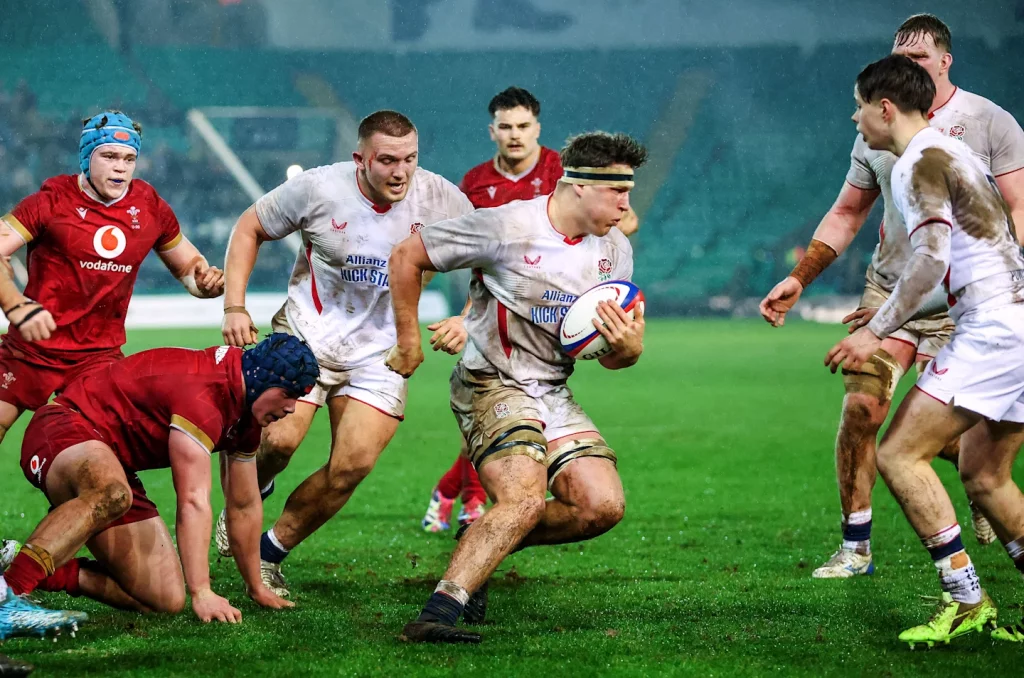
Match report
The early exchanges set the tone : physical, high tempo and evenly matched at scrum time, despite an early penalty conceded by the Scottish pack for wheeling under pressure. Both sides created half-chances inside the opening five minutes, but it was England who struck first.
From a scrum on halfway following a Scottish knock-on, scrum-half Lucas Friday showed sharp game awareness. Spotting space around the fringe, he darted through a narrow gap before delicately chipping over the advancing defence. The bounce fell kindly, and fly-half Finn Keylock gathered to cross for the opening try. Surprisingly, the conversion drifted wide, leaving Scotland within touching distance at 5–0.
England nearly doubled their advantage shortly afterwards, only to be held up inches short of the line. Scotland, meanwhile, showed glimpses of attacking threat but lacked the precision required in the red zone. As the half unfolded, fine margins began to shape the contest, particularly at the line-out, where Scotland struggled to secure clean ball in what is such a fundamental platform at this level.
Those issues proved costly in the 22nd minute. A misfired Scottish line-out near their own try line handed England an immediate opportunity. Hooker Jimmy Staples powered over despite the attention of two defenders, underlining England’s opportunism. This time Keylock added the extras to stretch the lead to 12–0. It was a punishment that reflected Scotland’s early fragility in the set-piece.
Roared on by the home support, Scotland responded with intent. Two successive penalties allowed them to establish territory deep inside England’s 22, and from close range Hamish MacArthur forced his way over to ignite the contest. Minutes later, from a well-executed penalty to touch, Rory McHaffie dotted down beneath the posts after a series of close-range carries. Suddenly it was 12–12.
England’s discipline had wavered during that spell, with flanker Seb Kelly shown a yellow card amid mounting pressure. The visitors were struggling to match Scotland’s raw power around the fringes and paid the price.
Yet this England side showed impressive resolve. Down to fourteen men, they struck back almost immediately. After earning a penalty and kicking into the corner, the forwards went to work through a sequence of tight pick-and-go phases before captain Connor Treacey drove over to reclaim the initiative. Keylock converted, restoring England’s lead at 19–12.
Scotland, however, refused to fade. On the stroke of half-time, Jamie Stewart crossed in the corner following sustained pressure. The conversion was missed, leaving England narrowly ahead 19–17 at the interval.
Although the scoreboard reflected a tight contest, the broader impression favoured England. They appeared more composed technically and more adventurous in attack, though occasional lapses in discipline and physical confrontations had allowed Scotland to remain firmly in the fight.
The second half confirmed England’s growing authority. Almost immediately after the restart, Friday again caused havoc with a clever grubber in behind the defensive line, forcing panic in the Scottish backfield. While that opportunity did not result in a score, it reinforced England’s territorial dominance.
The decisive moment soon followed. Gathering a loose Scottish clearance, full-back James Pater launched a scintillating counter-attack. Beating multiple defenders with sharp footwork, he combined cleverly with Sam Winters before backing his own pace and balance to finish beneath the posts. It was a try of genuine quality : instinctive, ambitious and clinical and it secured England’s all-important bonus point at 26–17.
Despite a handful of contentious refereeing decisions and two frustrating line-out errors close to the Scottish line, England retained control of both territory and tempo. Defensively, Nick Lilley was outstanding in the wider channels, repeatedly halting promising Scottish advances.
The contest was finally put beyond doubt inside the last ten minutes. Launching another counter from deep inside their own half, Pater once again demonstrated his vision with a perfectly timed offload to replacement Will Knight. The move flowed left, with Tyler Offiah linking superbly before returning the ball for Knight to finish in the corner. It was a beautifully constructed team try, showcasing the impact of England’s bench and underlining their attacking depth. The conversion from the touchline capped the evening at 33–17.
Unsurprisingly named Player of the Match, James Pater epitomised England’s technical superiority and attacking flair throughout. With two wins from two, including a bonus-point success away from home. England have executed the perfect start in the standings and look every inch genuine title challengers.
For Scotland, the outcome is harsher. Despite scoring three tries and producing competitive spells, they leave without a single bonus point.