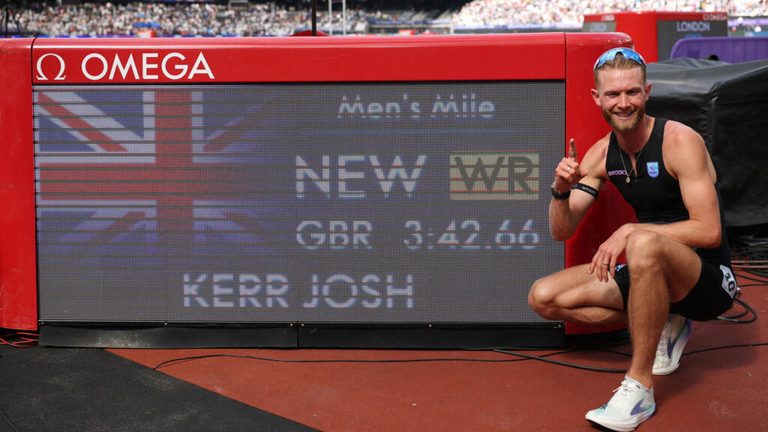
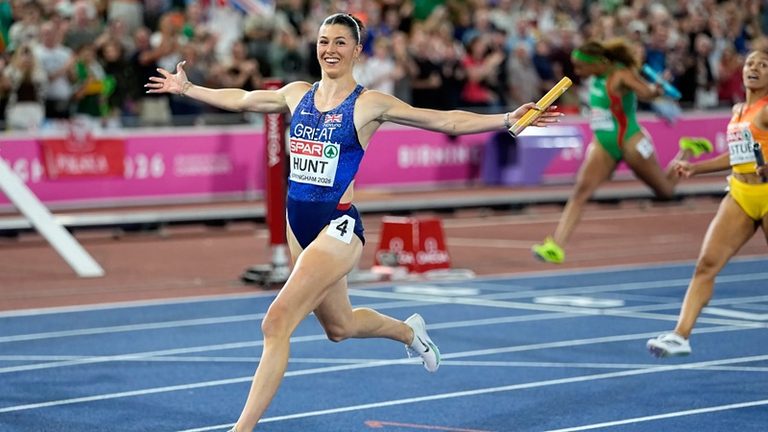
Louie Hinchliffe, Dina Asher-Smith, Amy Hunt, Matthew Hudson-Smith. The absentees from the 2026 World Relays are impossible to ignore. Four of the most recognisable faces in British sprinting will not be on the start line in Gaborone in less than two months’ time. To that list, you can add Daryll Neita and Amber Anning, key figures over 100m and 400m respectively.
Those withdrawals have opened the door to a clear strategic shift. The approach is twofold: secure qualification for all relay teams for the 2027 World Championships, and expose a new generation to the demands of senior international competition, just two years out from the Los Angeles Olympic Games.
Gaborone 2026: a full-scale testing ground for British sprinting
The 2026 World Athletics Relays will take place on 2–3 May at the National Stadium in Gaborone, Botswana. Six events are on the programme: men’s, women’s and mixed 4x100m, as well as men’s, women’s and mixed 4x400m. Twenty-four teams will contest each event, with only one quartet permitted per national federation. The eight finalists from the most recent World Championships qualify automatically, alongside the host nation, with the remaining places determined by performances recorded between 1 January 2025 and 5 April 2026. The mixed relays carry added significance, offering direct qualification to the World Championships in Budapest for the top six teams.
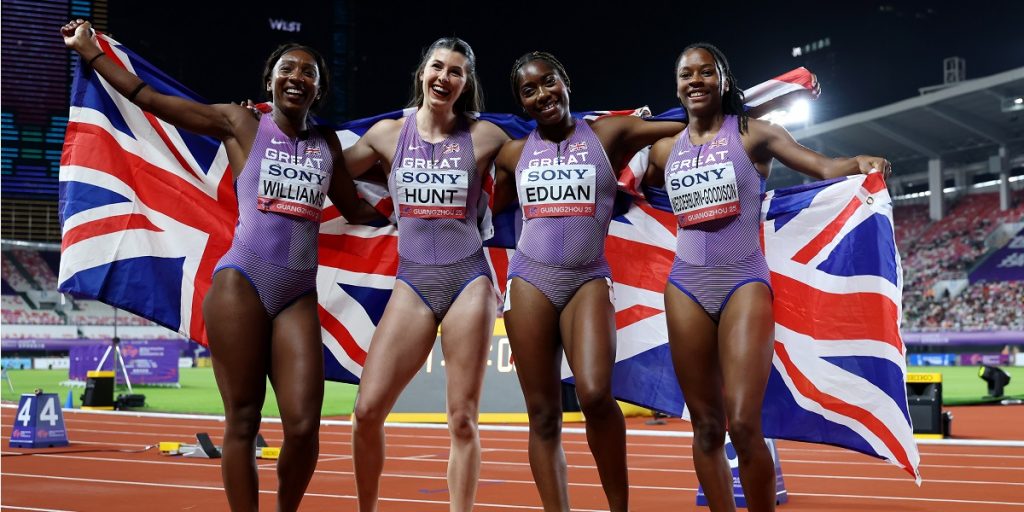
The generational shift is most striking in the women’s 4x100m squad. Eight of the ten selected athletes are aged 23 or under, the only exceptions being Olympic relay medallists Imani Lansiquot and Desiree Henry. The absences of Amy Hunt, and particularly Daryll Neita and Dina Asher-Smith, inevitably accelerate that transition. Lansiquot and Henry provide the experience and composure forged in global finals, but around them the youth movement is unmistakable.
Success Eduan, Kissiwaa Mensah, Alyson Bell and Nia Wedderburn-Goodison – European U23 relay champions in 2025 – arrive with well-drilled changeovers and a winning pedigree at age-group level. Renee Regis, newly crowned British indoor 200m champion, will make her senior international debut, as will Mabel Akande and Jasmine Wilkins. It is a squad clearly built with Los Angeles in mind: developing chemistry early, under pressure, on the world stage.
The men’s 4x100m selection is more balanced, though still forward-looking. Zharnel Hughes remains the spearhead and the benchmark over 100 metres. Jeremiah Azu, world and European indoor 60m champion, adds raw acceleration and championship nous. Nethaneel Mitchell-Blake brings invaluable experience, not least as a former world champion in the event in London in 2017.
Behind that trio, however, there is significant rotation. Teddy Wilson, European U20 silver medallist in 2025, will earn his first senior call-up. Ethan Wiltshire, Elliot Jones and Jody Smith – the latter a breakout performer over 60m this winter – also step into the senior arena. Romell Glave, Jona Efoloko and Jeriel Quainoo round out a deep pool of options. Recent international outings have shown that British men’s sprint relays have not always executed cleanly in the changeover zones; this selection offers competition for places and a chance to re-establish consistency.
The men’s 4x400m is largely unaffected by withdrawals, with only Olympic silver medallist Matthew Hudson-Smith absent. The core remains intact: Charlie Dobson, Alex Haydock-Wilson, Toby Harries and Lewis Davey are all Olympic relay medallists and form a seasoned backbone. Jake Minshull, primarily a 400m hurdler, will make his senior debut, while Harry Bradley – born in 2007 and a surprise runner-up at the British Indoor Championships – represents one of the boldest selections in the squad.
In the women’s 4x400m, Nicole Yeargin and twin sisters Laviai and Lina Nielsen anchor a team missing Amber Anning. Anning has opted not only to curtail her indoor campaign but also to sit out these upcoming commitments in order to prioritise the summer season and the European Championships in Birmingham, where she will compete on home soil. Yemi Mary John, European U23 medallist and 2026 British indoor champion, continues her upward trajectory and has consistently delivered in major championships. Around them, Charlotte Henrich, last year’s European U20 400m champion, and Louisa Stoney will both make their senior debuts. Emily Newnham, European U23 400m hurdles champion and a double European relay medallist at senior level last season, completes what is another notably youthful unit.
In the short term, the priority is qualification. In the medium term, the objective is more structural: moulding a relay programme capable of peaking in Los Angeles. Eleven athletes are set to make their senior debuts, forming the spine of what British Athletics hope will be a broader, more resilient squad. The expected return of the established names – Hinchliffe, Asher-Smith, Hunt, Hudson-Smith and others – will eventually add proven quality and experience to this expanding base.
British Team – 2026 World Relays
Women’s 4x100m
- Imani Lansiquot
- Desiree Henry
- Nia Wedderburn-Goodison
- Success Eduan
- Kissiwaa Mensah
- Aleeya Sibbons
- Alyson Bell
- Renee Regis (senior debut)
- Mabel Akande (senior debut)
- Jasmine Wilkins (senior debut)
Men’s 4x100m
- Zharnel Hughes
- Jeremiah Azu
- Romell Glave
- Nethaneel Mitchell-Blake
- Jona Efoloko
- Jeriel Quainoo
- Teddy Wilson (senior debut)
- Jody Smith (senior debut)
- Ethan Wiltshire (senior debut)
- Elliot Jones (senior debut)
Women’s 4x400m
- Laviai Nielsen
- Yemi Mary John
- Nicole Yeargin
- Lina Nielsen
- Emily Newnham
- Poppy Malik
- Louisa Stoney (senior debut)
- Charlotte Henrich (senior debut)
Men’s 4x400m
- Charlie Dobson
- Lewis Davey
- Alex Haydock-Wilson
- Toby Harries
- Lee Thompson
- Seamus Derbyshire
- Josh Faulds
- Jake Minshull (senior debut)
- Harry Bradley (senior debut)
The mixed relays (4x100m and 4x400m) will be formed from athletes selected in the men’s and women’s squads listed above.