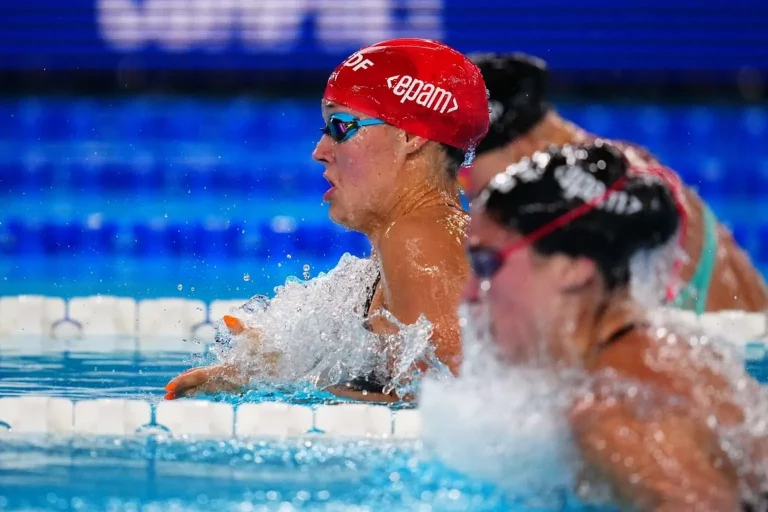
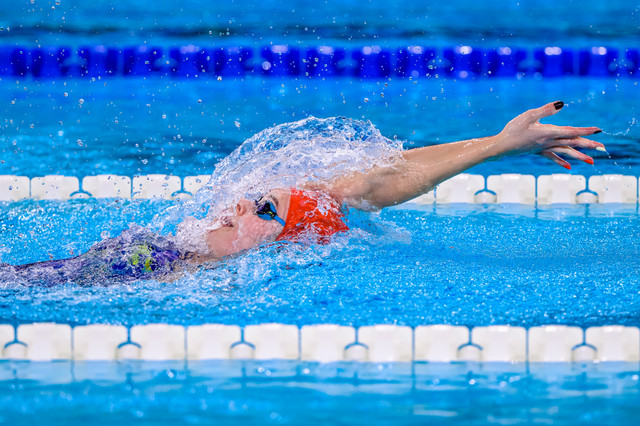
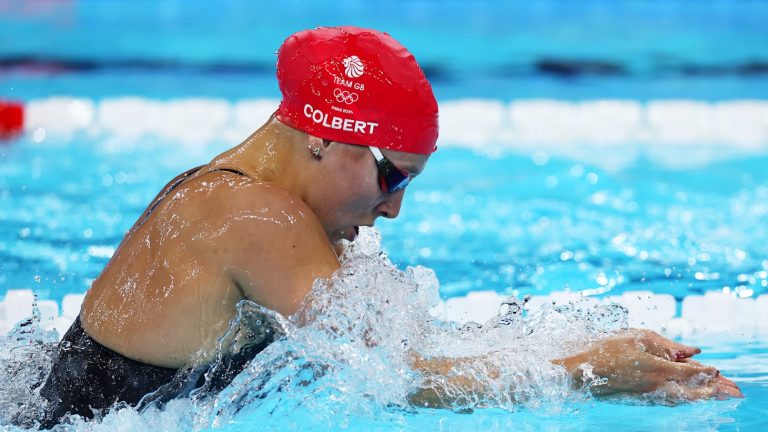
Cameron Brooker, Edward Mildred and Tyler Melbourne Smith have each lowered a British short-course record in recent days at the Winter Championships held in Sheffield.
Across just a handful of races, national benchmarks fell in the men’s 200m backstroke, 200m butterfly and 800m freestyle, some by significant margins. These swims go far beyond the simple notion of record-breaking, reshaping the British all-time standings in their respective events and underlining a particularly rich moment for short-course swimming in the United Kingdom.
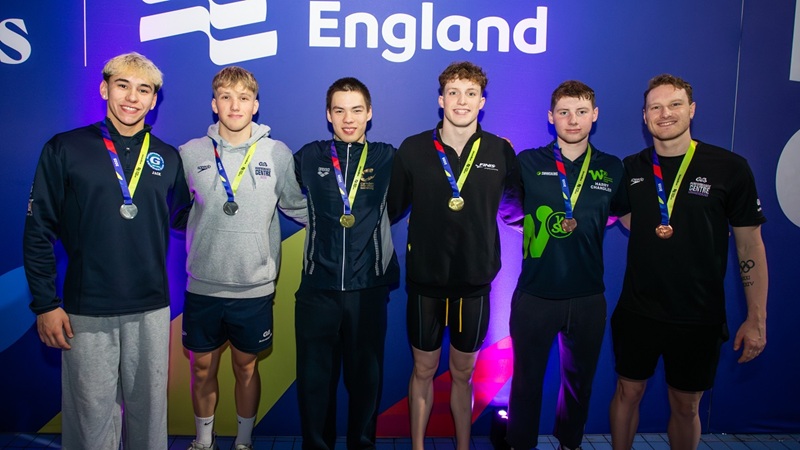
Three British records rewriting national history
It was in the men’s 200m backstroke that Cameron Brooker delivered one of the standout swims of recent British short-course history. Clocking 1:48.36, the Birmingham-born swimmer sliced 17 hundredths of a second off the previous national record held by Luke Greenbank. A marginal gain on paper, but a hugely symbolic one in an event Greenbank has largely dominated over several seasons, including the current campaign in which he finished fourth in the European short-course final.
That time sends Brooker straight to the top of the British all-time rankings, ahead of Greenbank’s 1:48.53, and makes him the only British swimmer ever to dip under 1:48.50 in the event. In doing so, he also leapfrogs established national references such as Craig McNally and Chris Walker-Hebborn, both now pushed beyond the 1:50 barrier.
On the global stage, Brooker’s 1:48.36 places him 17th on the all-time world list, just 0.68 seconds shy of the all-time top 10 — a relatively small gap in one of short-course swimming’s most competitive events.
The significance of the swim grows further when viewed through the lens of his personal progression. His previous best of 1:51.03 sat him outside the British top 10. In a single race, Brooker climbed more than ten places in the national all-time standings, underlining a clear step forward after a more difficult previous season.
Over 200m butterfly, Edward Mildred also carved his name into British swimming history. His 1:50.64 erased a national record that had stood since 2009, when Joe Roebuck set the mark at 1:51.27. The improvement — 63 hundredths — is substantial at this level and particularly striking given the longevity of the previous record.
Mildred now becomes the first British swimmer ever to break the 1:51 barrier in the short-course event. He sits alone at the top of the national rankings, over half a second clear of Roebuck, establishing an unprecedented margin in British butterfly history.
Prior to this race, Mildred’s personal best stood at 1:53.01, placing him some way down the historical pecking order. One swim was enough to slash more than two seconds from that time and propel him sharply up the British all-time list.
At European level, such a performance would have put him firmly in podium contention at recent major championships. More broadly, it confirms the rise of a swimmer already well established over 100m butterfly, now showing the capacity to control and dominate the longer distance — with further short-course opportunities later in the season likely to offer even more insight.
Finally, the men’s 800m freestyle saw Tyler Melbourne Smith emerge as a new national benchmark. The Warrington-born swimmer clocked 7:33.56, smashing the previous British record held by Kieran Bird by 2.70 seconds. On an endurance event where records rarely fall by such margins, the scale of the improvement is striking.
That swim makes Melbourne Smith the fastest British short-course 800m freestyler in history, and one of the very few to dip below the 7:35 mark. At just 20 years of age, he pushes the former national standard almost three seconds into the past — a huge gap at elite level.
His individual progression is just as compelling. Twelve months ago, his personal best stood at 7:39.37. He has therefore found nearly six seconds in a year, a strong indicator of long-term potential. Moreover, the longer the distance, the less decisive turns become, even if efficient underwater work remains crucial. It is therefore reasonable to believe that the British long-course record may also soon come under threat from the young Briton.
A national momentum reinforced by other performances
These records are part of a wider, highly encouraging picture for British swimming. Further north, in Edinburgh, Lucy Grieve left her mark at the Scottish Championships by becoming the third-fastest British performer of all time over the 50m butterfly, thanks to her 25.78. She now sits 0.49 seconds off the outright British record held by Francesca Halsall since 2014 — still a notable gap over such a short sprint distance.
Grieve also climbed to third on the British all-time list over 100m butterfly with a time of 56.17, confirming her consistency across both events and her growing status as a leading butterfly swimmer.
On the men’s side, Matthew Ward rose to third in British short-course history over 200m backstroke, posting a strong 1:50.37 to slot in just behind Cameron Brooker and Luke Greenbank.
Meanwhile, Josh Gammon impressed over 100m butterfly, stopping the clock at 49.49 to become the second-fastest British swimmer of all time in the event. Now just 0.28 seconds off the national record, he reinforces Britain’s growing strength in butterfly, suggesting that alongside Edward Mildred, the stroke is enjoying a genuine resurgence.
On the junior side, the young talents Gabriel Shepherd and Patryk Przyczyna distinguished themselves by breaking three national records: Shepherd in the 50m freestyle, and Przyczyna in both the 50m and 100m backstroke. All of this unfolds within an exceptionally promising context for British swimming, which appears to be witnessing record-breaking performances across every distance and age category.