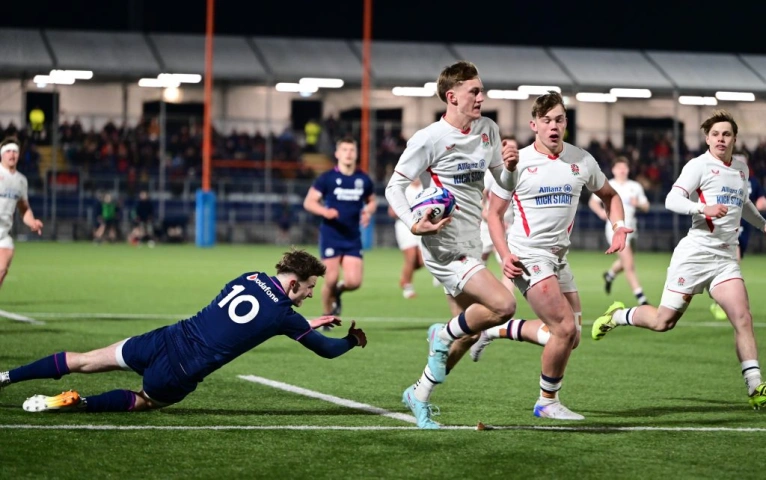
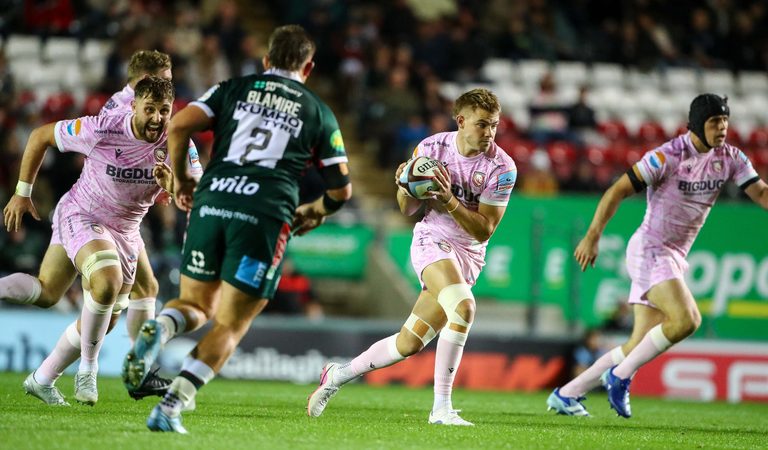
Archie McParland is emerging, week after week, as one of the most exciting prospects in English rugby. With each passing round, he looks increasingly settled in the scrum-half role for a Northampton Saints side operating at a very high level. At just 21 years of age, McParland has seized every opportunity handed to him, and since Alex Mitchell’s injury during the Six Nations, the young No.9 has been both influential and decisive, raising a genuine question: could he soon disrupt the established pecking order in the England set-up ?
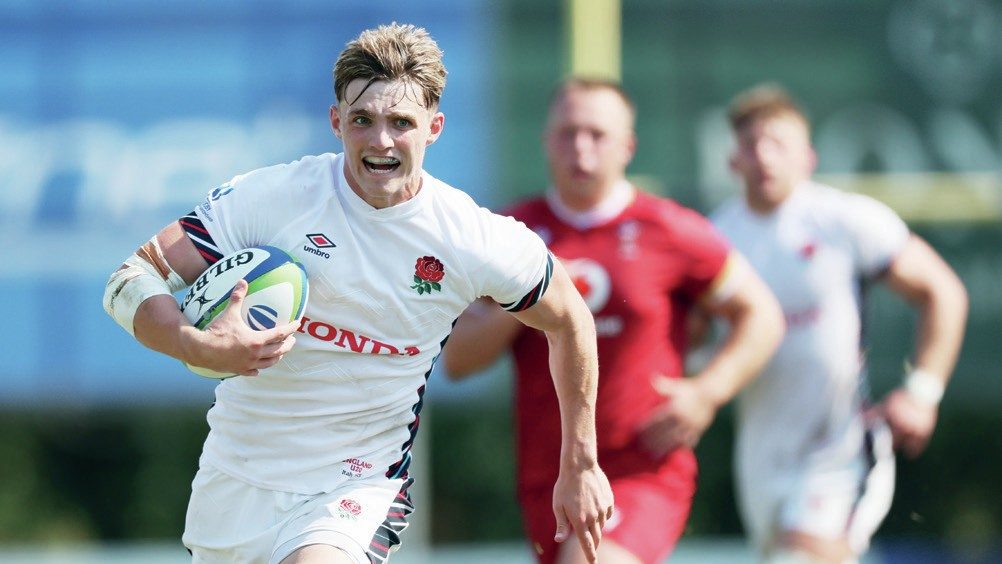
A rapid rise and a profile that stands apart
Developed within the Northampton Saints system from a young age, Archie McParland did not always look destined for the scrum-half role. Initially deployed at fly-half and full-back, he only made the switch to No.9 during his teenage years. While later than many of his peers, that transition has ultimately enriched his game, giving him a broader tactical understanding and a sharper feel for space.
Stylistically, McParland is a tempo-setter. Where many scrum-halves prioritise structure and control, he injects energy and momentum. His game is played at speed, but with clarity, and crucially, always with a forward-thinking mindset. Unlike more conservative profiles often seen in England, he is willing to attack the line, challenge defensive fringes and exploit gaps himself rather than simply distributing.
That appetite for risk is central to his impact. This season, he has been directly involved in a significant number of decisive moments, producing impressive attacking output for a scrum-half. Tries, support lines, intelligent reads : his contributions go far beyond basic distribution. His recent display against Castres in the Champions Cup was a perfect case in point. Acting as Northampton’s on-field conductor, he delivered a complete performance: five tackles, nine kicks from hand, 110 metres gained and a try to his name. More importantly, he consistently put his side on the front foot, playing a key role in a hard-fought victory achieved despite a number of absentees within the Saints squad.
Alex Mitchell’s injury—England’s first-choice scrum-half and a key figure for both club and country—opened a window of opportunity, and McParland has taken full advantage. He has accumulated around 900 minutes of game time this season, averaging 43 minutes per match, a figure that has naturally increased since Mitchell’s absence.
That said, his game is not without flaws. His ambition can occasionally tip into risk, particularly in his passing. Some deliveries sit on the edge, and a few have been intercepted or come close to it, exposing his side unnecessarily. Against Castres, one such pass could have proved costly if not for a favourable refereeing decision.
An international future already taking shape
If Archie McParland is making waves at club level, his international trajectory suggests he is already firmly on the radar. Having progressed through the age-grade system, he impressed with England U20, notably playing his part in their Six Nations triumph in 2024.
More telling, however, is his recent involvement with England A. This intermediate side, effectively the final stepping stone before the senior squad, brings together players on the cusp of full international honours. His selection at that level is a clear indication of how highly he is rated within the national pathway.
Competition at scrum-half remains fierce. Alex Mitchell, despite his recent injury setback, is still the established first choice. Behind him, Ben Spencer offers experience and reliability, even as he approaches his mid-thirties, while players such as Jack van Poortvliet and Raffi Quirke continue to compete for a place as the third choice.
Within that context, McParland’s greatest strength may well be his uniqueness. While the more established options excel in game management and control, he brings unpredictability and tempo : qualities increasingly valuable in the modern international game, where attacking initiative and fluidity are paramount.
His age is another significant advantage. At just 21, he embodies the new generation that national sides are keen to integrate ahead of major tournaments. With a Rugby World Cup on the horizon, squad evolution becomes essential. The depth chart at scrum-half could therefore shift. Mitchell, for all his quality, is nearing his late twenties, while Spencer represents a more short-term option. In that light, introducing a player like McParland as a third-choice option, one capable of offering something different appears increasingly logical.
Upcoming international fixtures, including the inaugural Nations Championship in July 2026, could provide the perfect platform to test emerging talent and broaden squad depth, even if a potential opener against reigning world champions South Africa would represent a daunting initiation.
Ultimately, much will depend on the direction taken by the England coaching staff. After a difficult Six Nations campaign, head coach Steve Borthwick may be tempted to inject fresh energy by introducing more dynamic profiles such as McParland. Conversely, with a World Cup in Australia approaching, there may be a preference to rely on an experienced and settled core, delaying his immediate breakthrough.