For a long time confined to isolated successes and a handful of highly targeted disciplines — curling above all — British winter sport is now living through a distinctly different chapter in its history. With the Milan–Cortina 2026 Olympic Games now just weeks away, Team GB has never appeared to possess such a broad pool of athletes capable of competing at the sharp end on the international stage. Recent results in alpine skiing, snowboarding, freeski and skeleton paint a far more ambitious picture than that of recent Olympic cycles. At the Beijing Games in 2022, Great Britain left China with two medals — one gold and one silver, both in curling — and a 17th-place finish in the overall medal table, identical to its ranking at the previous three editions. Today, however, the signals sent out by a new generation suggest a deeper, more diverse — and potentially far more rewarding — horizon.
A new wave shaking up the established order
The first clear takeaway from the opening weeks of the winter season is unmistakable: Great Britain is no longer relying on one or two isolated figureheads. Instead, it boasts a growing group of talents — many of them young — already capable of winning at the very highest level, even as global competition continues to intensify. This shift is particularly evident in the freestyle disciplines, which have become the beating heart of Britain’s Olympic project.
At just 18 years of age, Mia Brookes embodies this transformation almost single-handedly. Already a slopestyle world champion, the snowboarder from Cheshire has begun her winter in emphatic fashion, claiming two Big Air World Cup victories in Beijing and Klagenfurt. Beyond the results themselves, it is the manner of her performances that truly stands out: exceptional technical control, some of the most demanding trick combinations on the circuit, and a level of consistency that sets her apart from many of her rivals. Brookes is no longer a prospect — she is a global benchmark, and one of Team GB’s most credible medal hopes for 2026.
In her wake, Kirsty Muir continues to carve out her own route towards the very top. At 21, the skier from Aberdeen demonstrated as early as the opening Big Air contest of the season at Secret Garden that she has fully rediscovered her level following a serious injury. Victorious in China, a double bronze medallist at the X Games and a regular presence on World Cup podiums, Muir possesses a rare quality: the ability to deliver when it matters most. Her trajectory underlines a key truth about Britain’s winter resurgence — it is no longer built on isolated flashes of brilliance, but on patient, long-term development.
This momentum is not confined to freestyle alone. In alpine skiing — historically a challenging discipline for British athletes — Freddy Carrick-Smith recently produced a major surprise by winning a European Cup giant slalom in Valloire, starting from bib number 48 and charging up an astonishing twenty places in the second run. Just months earlier, the 17-year-old had already made history by becoming the first Briton to win an alpine medal at the Winter European Youth Olympic Festival, taking gold in giant slalom in Bakuriani. While these results remain isolated on the global scale, they nonetheless point to a widening talent pool — especially given that Carrick-Smith’s younger brother, Zak, finished fourth in the downhill won by Freddy at those Winter Games.
British skeleton, the quiet driving force of an ambitious Olympic project
While successes in skiing and snowboarding fuel growing optimism, it is in skeleton that the United Kingdom currently stands out as a genuine global force. A niche discipline, often overlooked in mainstream debate, skeleton has nonetheless become one of the most reliable pillars of Britain’s Olympic ambitions.
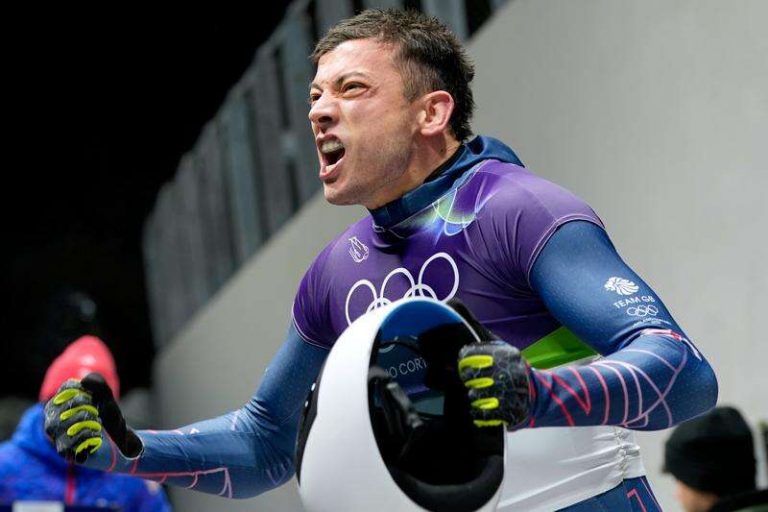
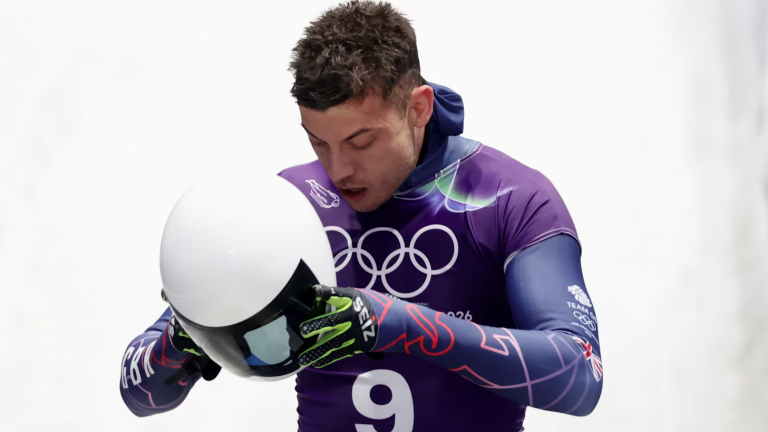
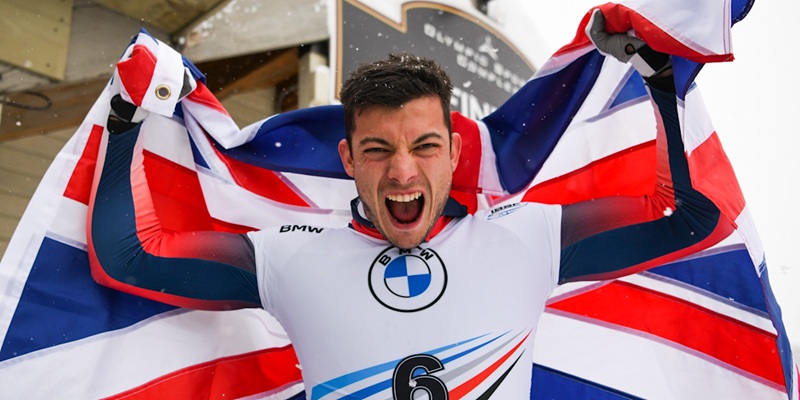
Since the start of the season, results have come thick and fast. In Sigulda, Latvia, Matt Weston confirmed his status as the world’s leading slider by claiming another World Cup victory — his third consecutive win of the campaign. Already victorious in Cortina and Lillehammer, the Briton dominated the field by a clear margin, despite a disrupted build-up following a serious quadriceps injury over the summer. His consistency, explosive starts and ability to perform across a wide range of tracks make him the natural favourite as Milan–Cortina 2026 approaches — a status as flattering as it is demanding.
Weston knows that pressure well. The reigning world champion and current overall World Cup leader, he is now the man everyone measures themselves against. Alongside him, Marcus Wyatt continues to operate slightly under the radar, yet with formidable efficiency. Silver medallist in Sigulda — just as he was at last season’s World Championships — Wyatt forms, together with Weston, one of the most feared pairings on the circuit, underlining the fact that Britain’s strength lies as much in depth as it does in individual excellence.
On the women’s side, the depth is just as striking, even if no single athlete currently dominates in the way Weston does. Tabby Stoecker, silver medallist in Sigulda after another blistering start performance, has firmly established herself among the world’s top three. At 25, she combines maturity and consistency, placing her among the most credible Olympic podium contenders. Alongside her, Amelia Coltman has also taken a significant step forward at 29. By securing bronze in Sigulda — her best result of the season — she reminded observers that she remains a cornerstone of the British squad. A former World Cup winner, Coltman appears to be peaking at precisely the right moment.